• The CraftSessions Story
  • Our Past Retreats
  • Blog
  • Newsletter
  • Contact
Menu

The Craft Sessions

Street Address
City, State, Zip
Phone Number

The Craft Sessions

  • About
    • The CraftSessions Story
    • Our Past Retreats
  • Blog
  • Newsletter
  • Contact

The Best Hemming Trick Ever (in my opinion)

February 13, 2015 thecraftsessions

There was this episode of The Good Wife where in order for anyone to say anything to the presiding judge they had to add "in my opinion" to every statement they made. Anyhoo…. In my opinion this is the best hemming trick of all time! It is a technique for doing a double-folded hem, without any measuring, that is accurate, tidy and simple. 

I use this hemming technique on practically everything - and I generally ignore pattern instructions that tell me something different. The only time I don't use it is when I am making something "special", using a super fine fabric, or something silky or synthetic. Generally as I only use natural fibres this works like a dream. That all said, I am sure there is a professional dressmaking reason why more people don't suggest it, but after 35 years of sewing I can't figure it out. And as most of what I make is my kids clothes, and simple garments like the Scout Tee then this is perfect! It works for skirts and sleeves and pant legs and shirt bottoms - totally multi-purpose. 

I've written a disclaimer down the bottom. Please give it a read. I really want you to be happy.

How to get a super tidy hem with no fuss. 

I should start by staying that this trick really isn't a trick. It is just a super super simple way of ensuring that you get a neat hem with no measuring. I'm sure it has a name somewhere on the interweb and that there will be other tutorials. I just haven't come across them AND I don't come across many people who do hem this way so I thought I would share.

Step 1: Run the basting stitch.

Sew a basting stitch at the point at which you want the hem to be turned up - making sure that the row of basting stitch is twice the width of the finished hem you want. If possible sew the basting stitch in a contrasting colour at least on the right side of the fabric. It doesn't matter what your bobbin cotton is (assuming the bobbin colour is on the wrong side of your fabric). 
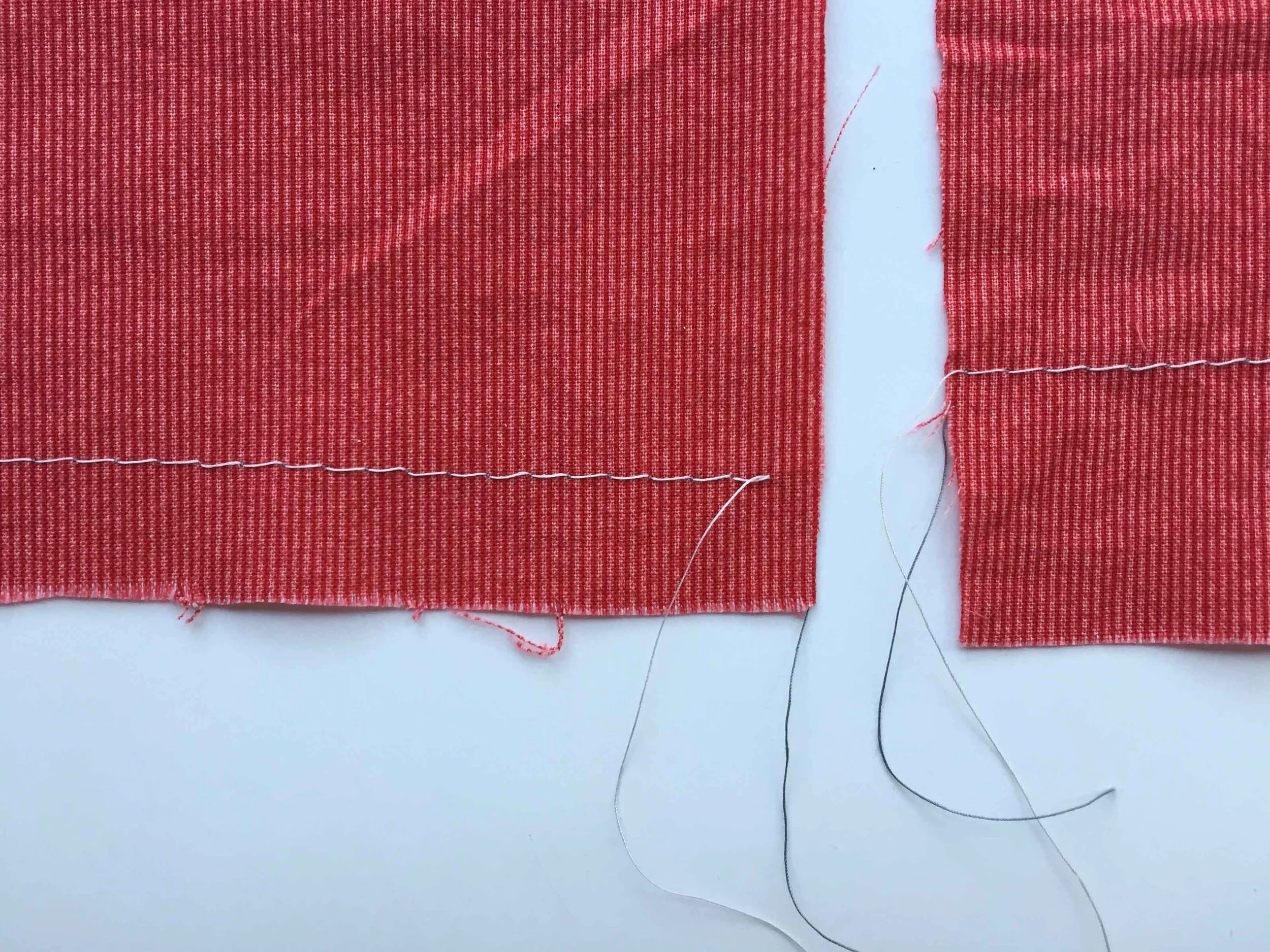
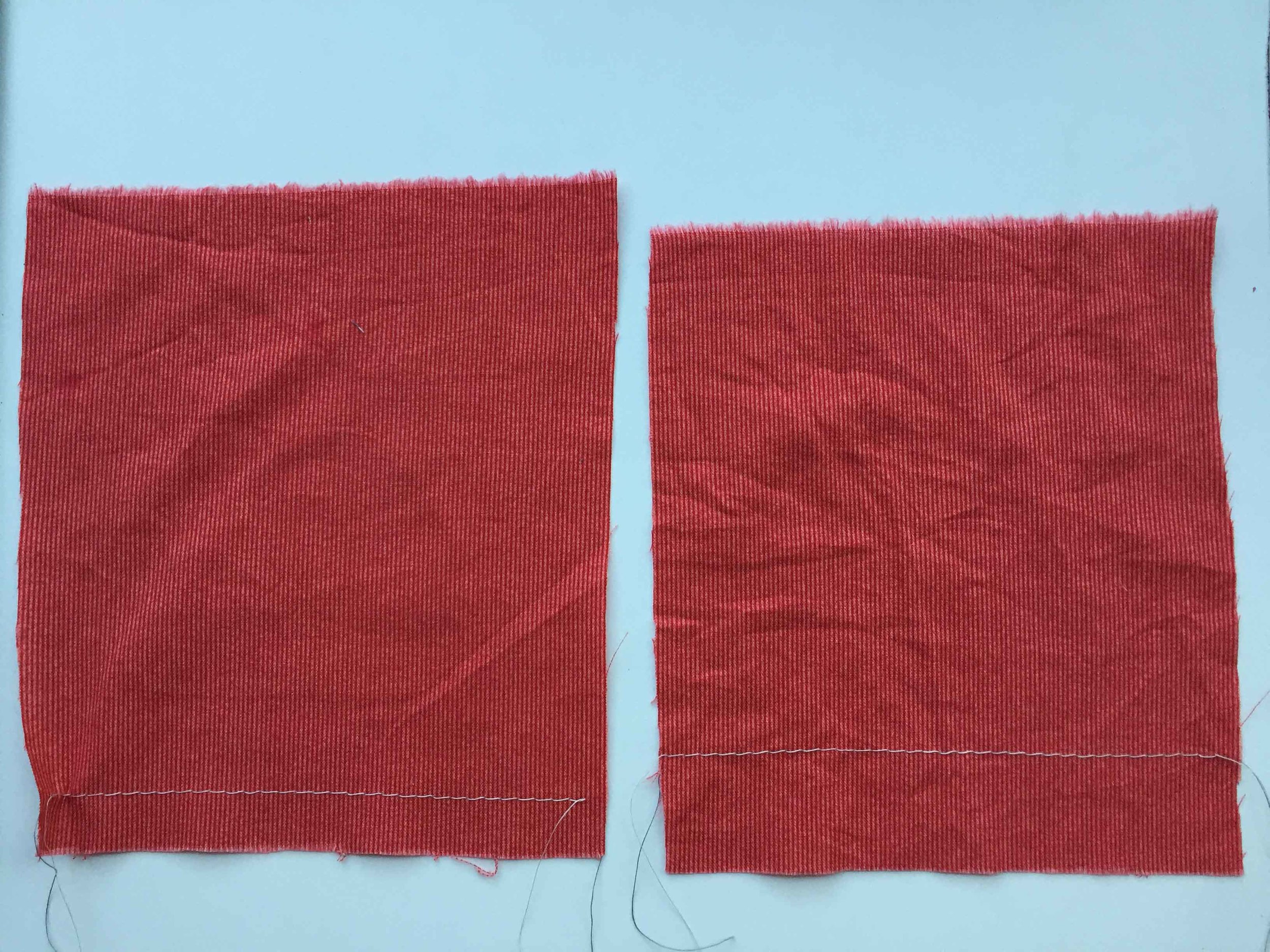
The basting stitch on the left was sewed at 1.5cm and the one on the right at 2.5cm. I also do some at about 4 or 5cm - which gives a heavier hem. Contrasting thread on the right side of the fabric.

The basting stitch on the left was sewed at 1.5cm and the one on the right at 2.5cm. I also do some at about 4 or 5cm - which gives a heavier hem. Contrasting thread on the right side of the fabric.

The key to this whole thing is that you accurately run the basting stitch using the seam guide on your machine. When I am making a wide hem, and the basting stitch is about 5cm from the raw edge, I use a piece of washi tape stuck to my machine as a seam guide. An accurate basting seam is the key!!!

I change the width of the hem depending on the weight of the fabric and obviously the desired length of the sleeve, top, dress etc. On a thinner fabric like a voile I generally run my basting stitch at 1.5cm (or even 1.2cm), and then on something thicker or for the hem of pants, shorts or a dress I might run the basting stitch at 5cm. 

Step 2: Iron up the hem using the basting as a guide.

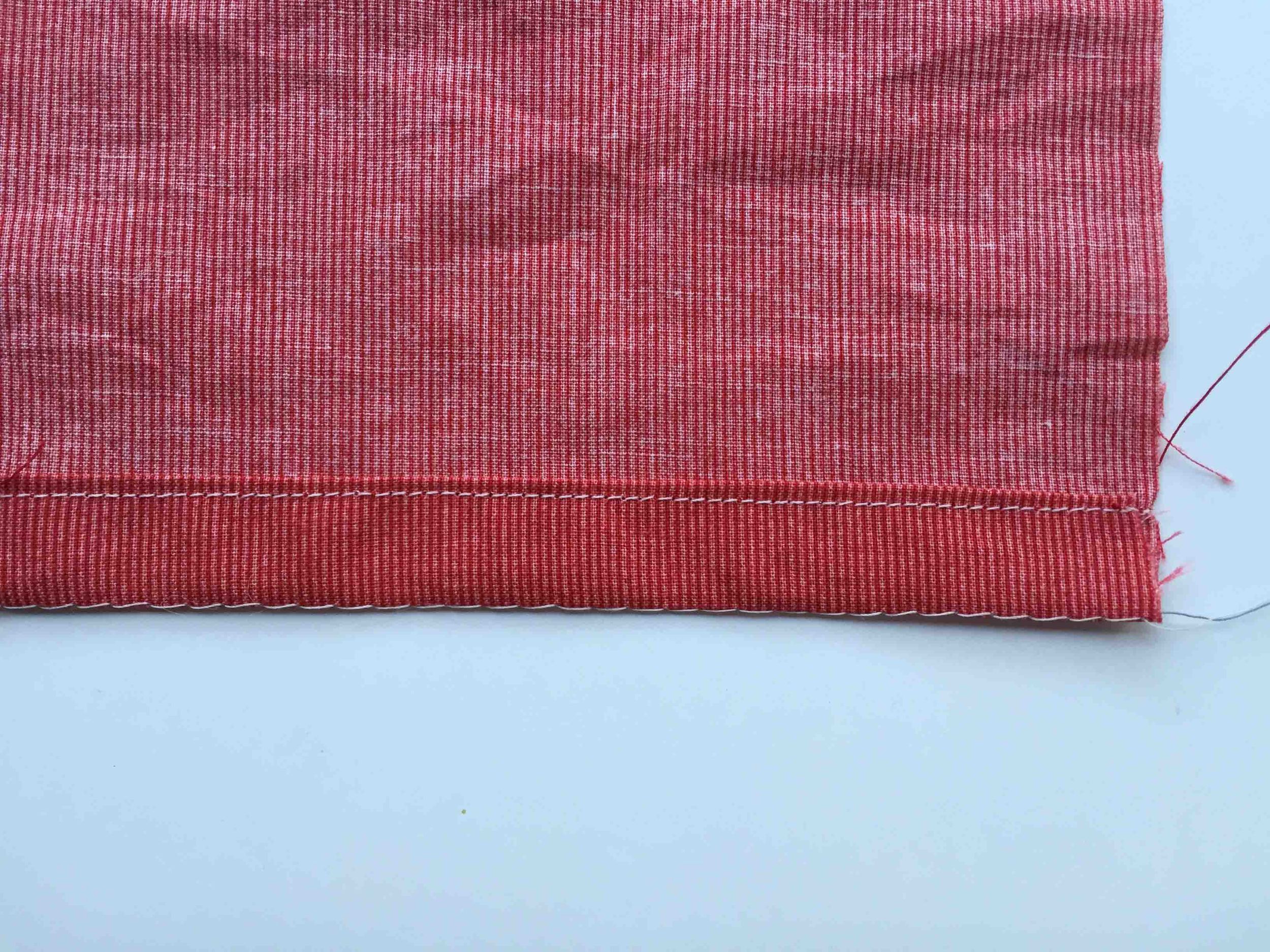
Iron the hem up using the basting stitch as a guide. The basting stitch should be on the fold exactly. The reason you want a contrasting colour is that you should be able to clearly see the basting stitch on the edge of the fold

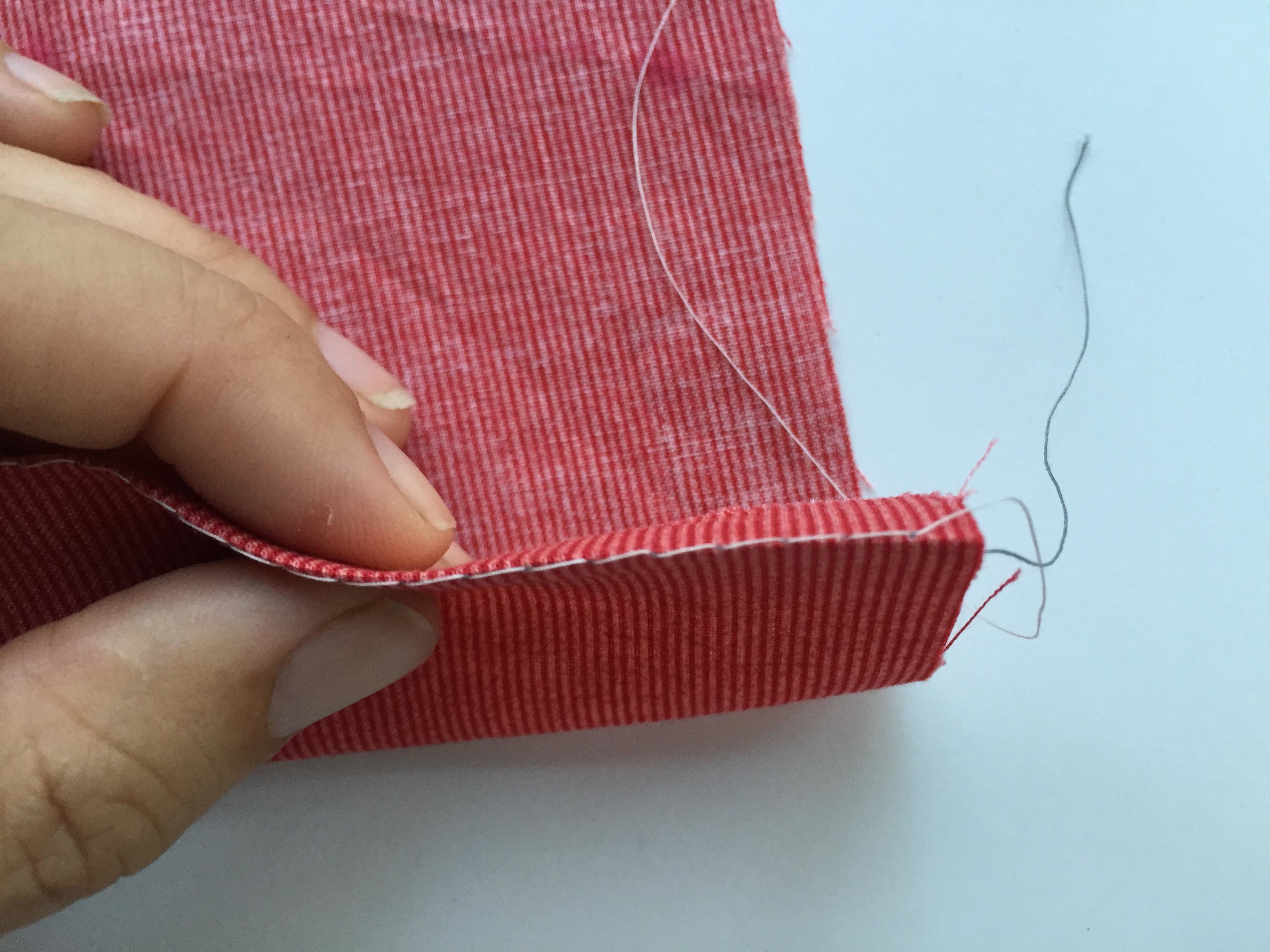
Step 3: Fold the raw edge to the fold.

With the fabric sitting on your ironing board - wrong side up - use your thumb and your forefinger to pinch the raw edge of the fabric into the fold and press at the same time. Pin it down and move on.

I kindof pinch the raw edge towards the fold.
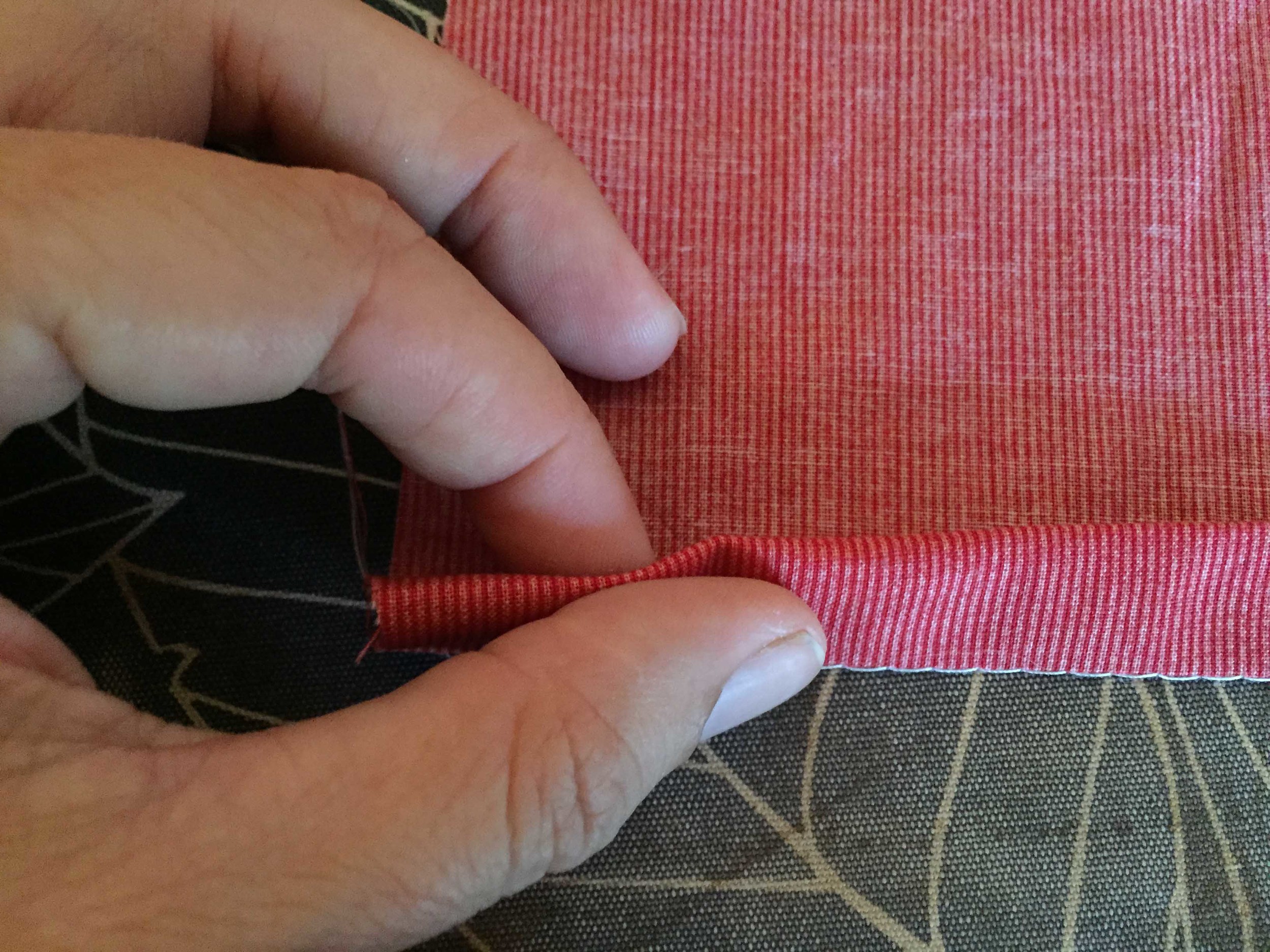
I kindof pinch the raw edge towards the fold.

You can feel when the raw edge hits the folded edge.

You can feel when the raw edge hits the folded edge.

After pinching it together I slide my pointer along my thumb to fold as much of the fabric as I can with one sweep - this is tricky to explain. Give it a go.
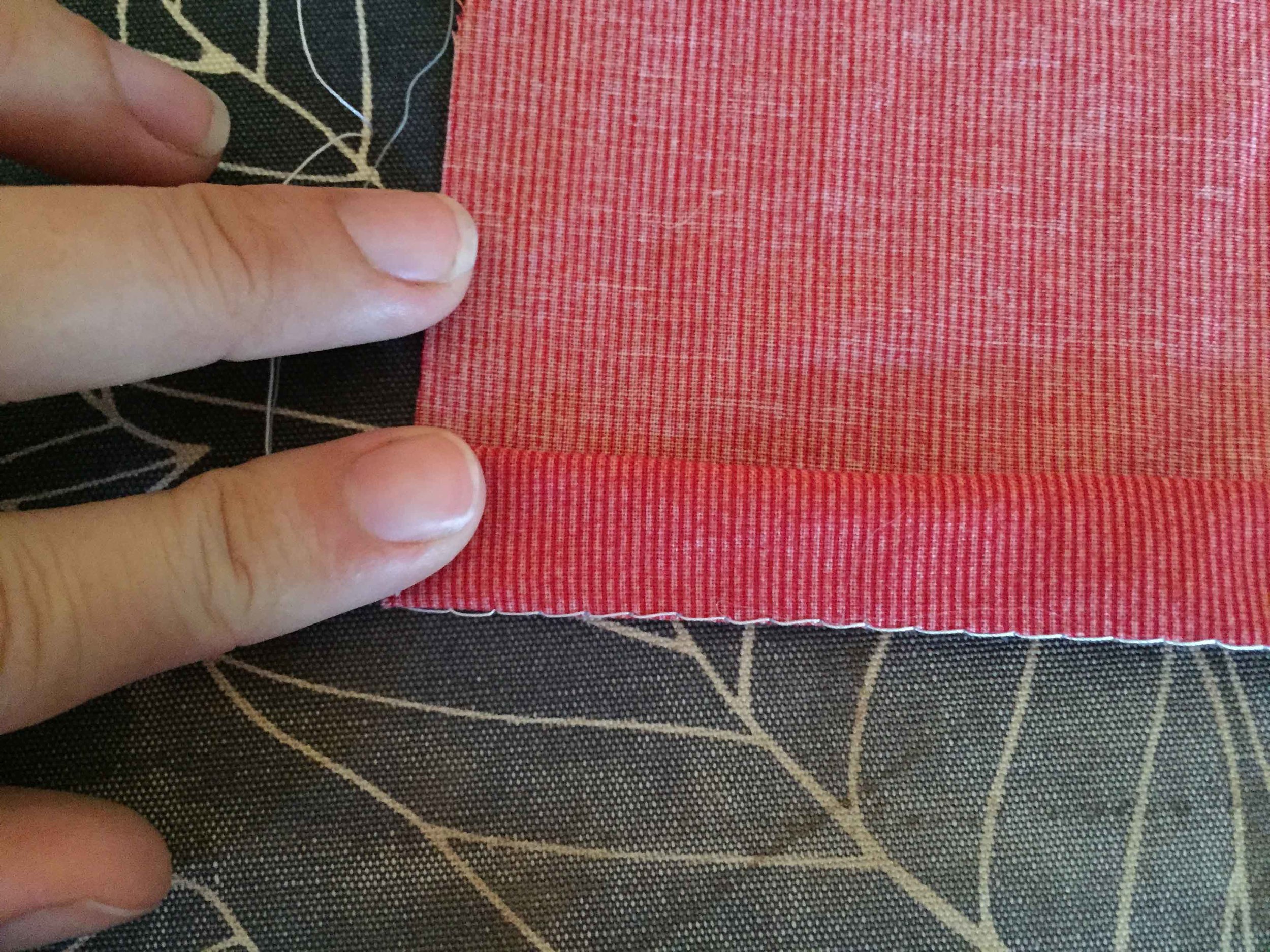
After pinching it together I slide my pointer along my thumb to fold as much of the fabric as I can with one sweep - this is tricky to explain. Give it a go.

Normally I iron as I go. I haven't ironed this yet.

Normally I iron as I go. I haven't ironed this yet.

This takes a little practice because it involves doing a couple of things - rolling the fabric exactly to the fold and ironing at the same time  - without burning your fingers. Go slow. Do a tiny bit at a time. Again the key is to make sure that you are accurately hitting the fold. You can do this by feel. There is no need to open the fold up - you can feel it. Just a bit of practice.
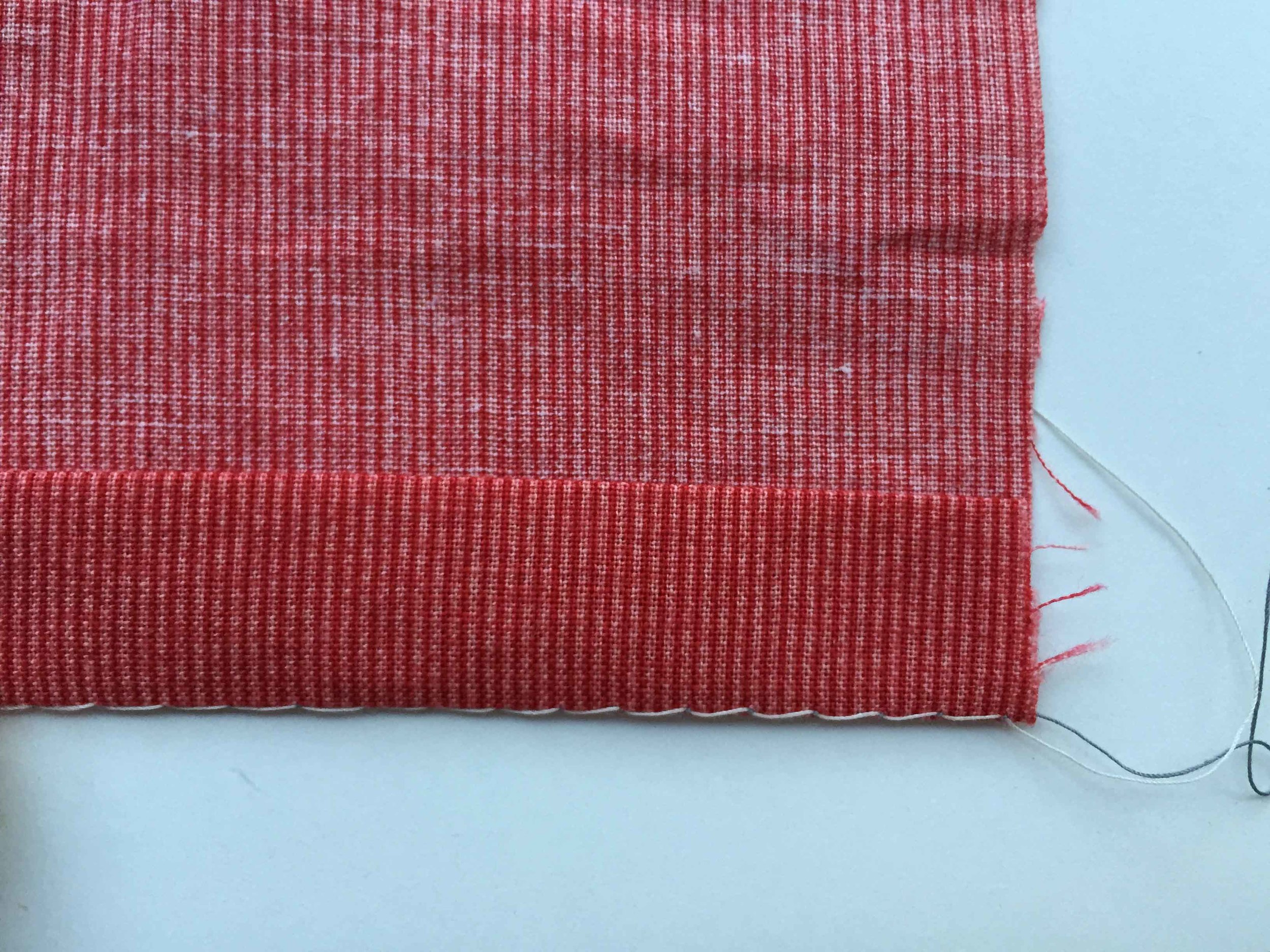
Ironed.
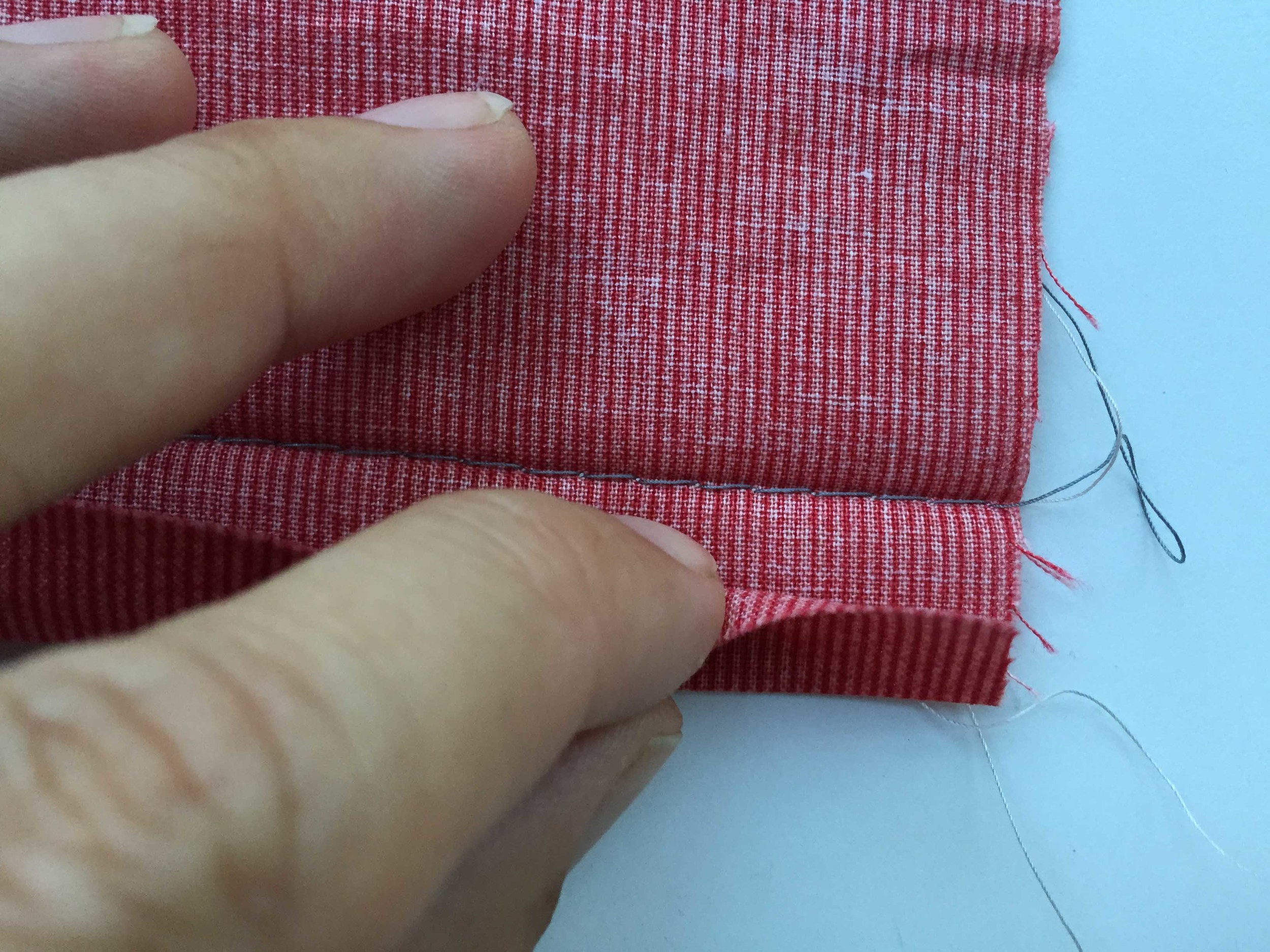
Ironed.

This is what it looks like opened out. You don't need to open it out - this photo is just to make it clearer.

This is what it looks like opened out. You don't need to open it out - this photo is just to make it clearer.

Step 4: Sew the hem.

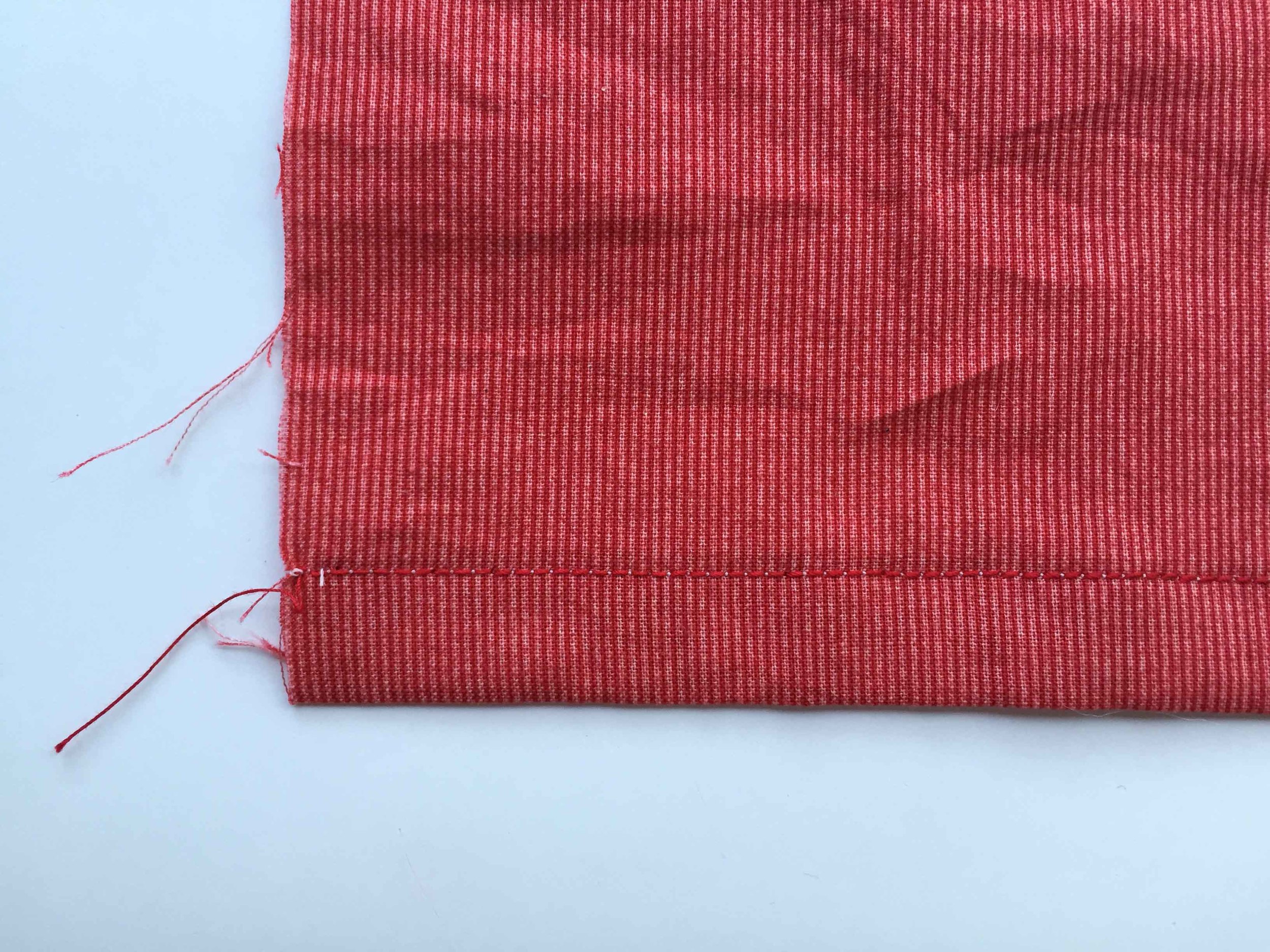
To topstitch down the hem. 
This is another super part of the technique. Because you know the exact measurement of the hem, because it is totally even, as long as you can sew a straight line with some degree of accuracy, you can sew the hem from the right side without worrying you aren't going to catch it. Sewing a hem from the right side of the fabric gives you a more even finish. I usually take my hem measurement and minus 2mm or 3mm from it to give me the measurement that I use to topstitch the hem down. Again washi tape can help. 
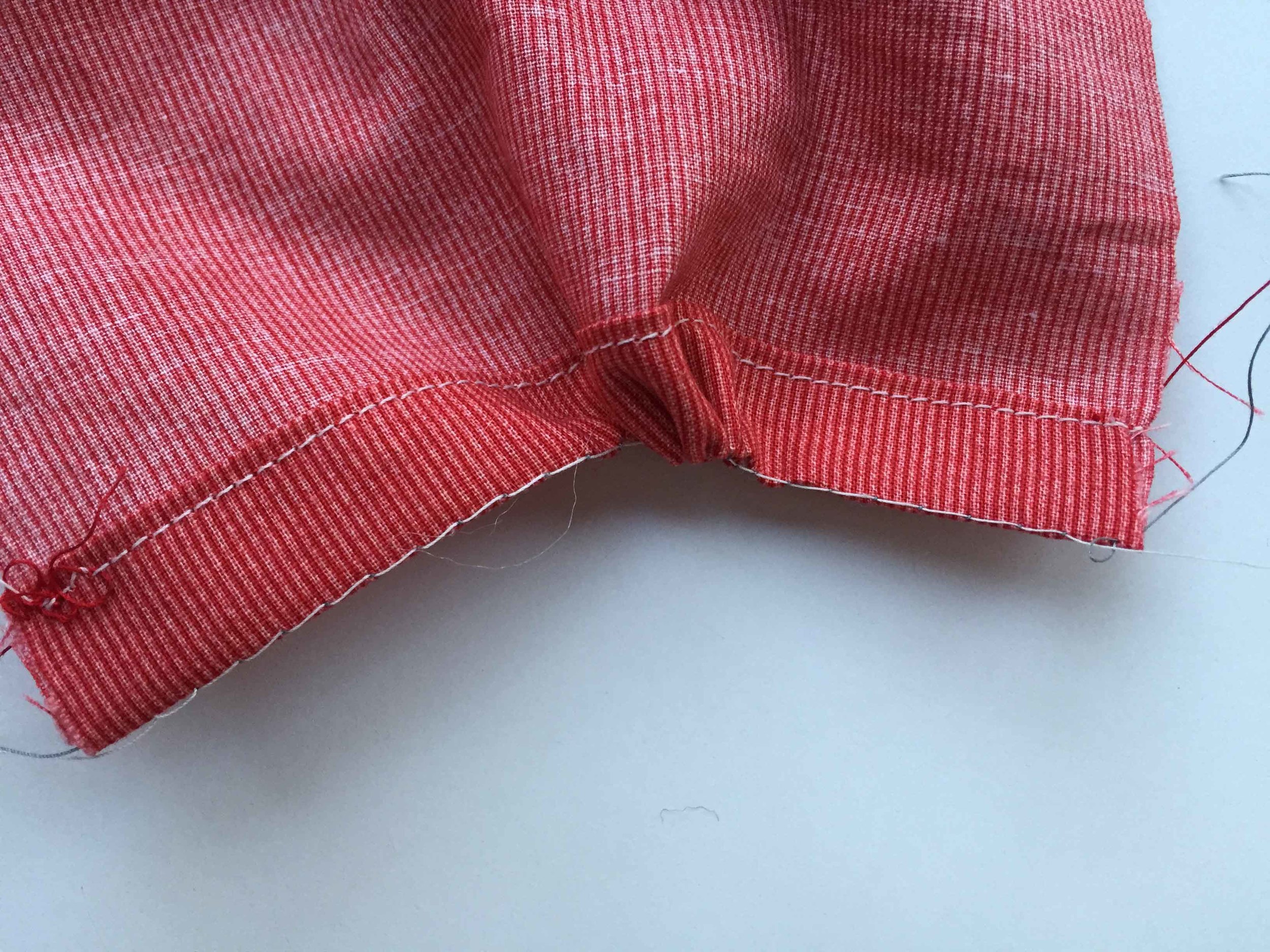
To blindstitch.

I would blind stitch on a birthday frock or a nice frock for me. I would still do quite a big hem as I would want the weight to hold down the skirt. 

Prepare as above but then fold back the inside of the hem to do your blind stitch. Google blindstiching if you need to! 

Step 5:

Pull out your basting stitch by pulling gently. When you first remove the basting stitch you may end up with little needle holes. These normally disappear after the first wash and press!

And now to the disclaimer!! As I haven't done this with every fabric and every sewing setup I can't guarantee these tiny holes will disappear. Please check on a scrap of your fabric. As I mentioned above I just want you to be happy in your sewing life! 
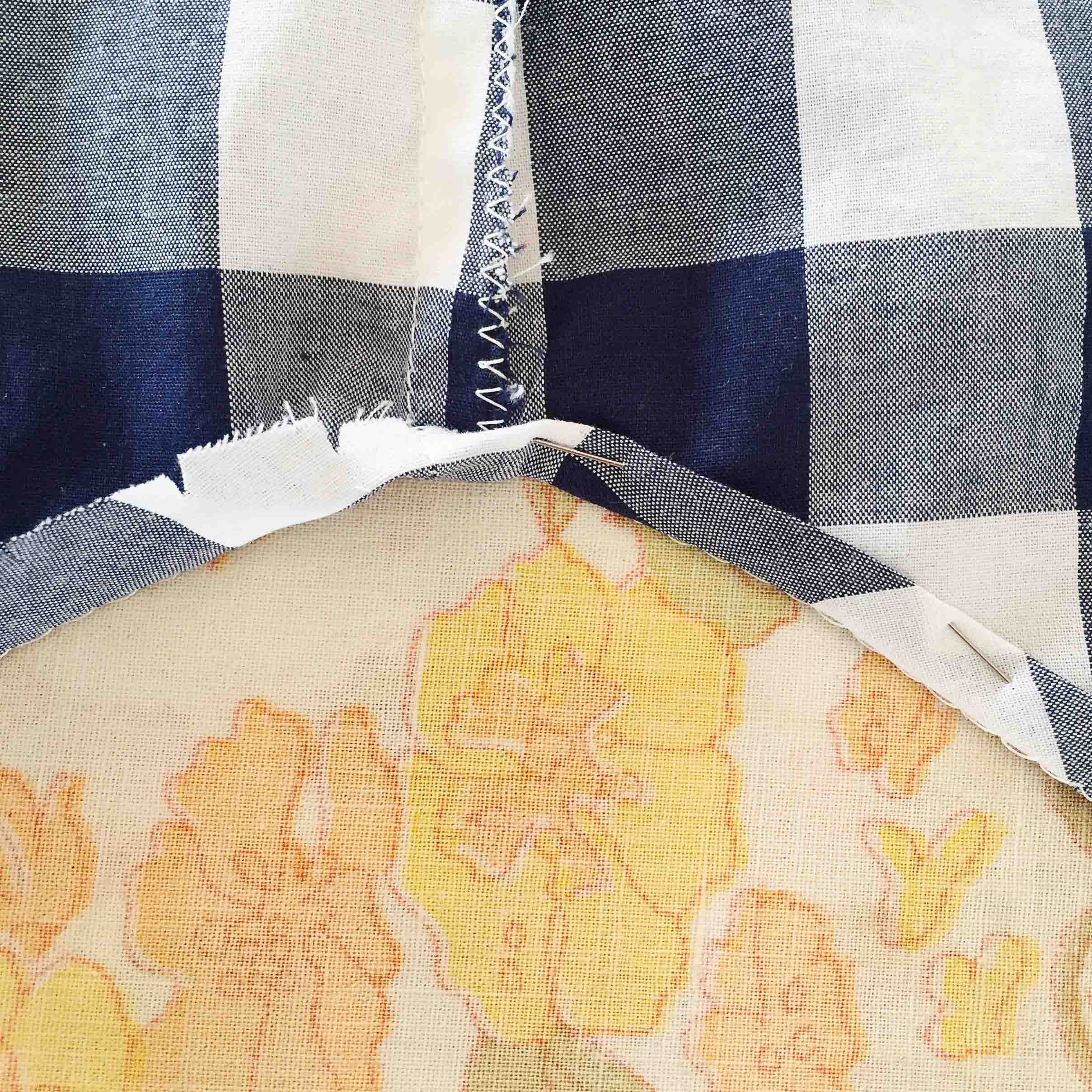
UPDATE: I just wanted to add one more photo which might help those of you trying to do the hemming trick around a tight curve for something like a shirt tail hem. Snip a few little notches about a third of the way towards the basting line before folding - as you see in the photo below. It will then sit flat. 
Enjoy!

Felicia x

In How To
25 Comments

How to get faster at knitting - Part 2

February 6, 2015 thecraftsessions
20150116-1697.JPG

So I wrote post last week called How to get faster at knitting - and I'm so chuffed you guys liked it. I read through the comments and started answering them but then decided that I should just follow up with another post in response instead - with some answers to questions, some additional info and a summary of your suggestions.

Before I start I wanted to say I really appreciate all the suggestions you made! What the comments definitely showed was that every-single-one of you has your own take on it, and your own knitting history that lead you there. 

Learn to knit without looking!

Jillian suggested in the comments that she would love a video (rather than my description) that showed how to learn to knit without looking and so I did that. This one is for you Jillian!

The video is good for throwers and flickers. Might not help you continental folks. 

Pain when knitting.

So I have heard some stuff - like that knitting lever style is good for pain in the hands as it is a big movement using the full arc (this from Stephanie Pearl McPhee) of the hand - therefore is less likely to cause RSI type pain as that is mainly about little movements that aren't using the full extent of the muscle.

But I also think that there is just a logical train of thought about this. If you are in pain with a particular style, try one of the other styles and see if you can use different movements and muscles. For example if you are knitting right handed then try Portuguese - a different hand and rather than using the fingers you are using your thumb to flick.

The lovely Sara pinged me on instagram after the post last week. She tried something from the video that meant she could knit after a six month knitting hiatus due to pain! She didn't change her style but just one of the movements she was doing. Happy happy days.

I wish you luck if this is an issue for you and would love to hear how you get on. I'm sure others would love to hear your experiences of pain/nopain if you have managed to sort this out. 

Other places to find efficiencies

I wrote a whole paragraph about this but forgot a couple that I think are worth mentioning (people's comments reminded me of a few of these). Points 5 & 6 are the new ones.

  1. How you hold the needles, from above or below.
  2. How you tension your yarn, around which fingers.
  3. How you wrap the yarn around the needle tips - throwing, picking or flicking.
  4. The angle with which the needle tips meet - could be almost parallel facing one another, at 90 degrees or heading towards parallel.
  5. How you load and hold the stitches on the needle
  6. How close to the needle tip you knit the stitch - closer to the tips is generally faster.

Another more specific efficiency I was thinking about was around using DPNs. I spent a bit of time working on this last year and it really has made a difference to how fast my small circular knitting is (sleeves etc). For me, I needed to remember to push the stitches to the end of the needle so they were ready to go for the next lot of knitting, not drop the yarn when I changed the needle and do a kind of needle flip to take the needle from my left hand (where it had no stitches left) to be ready to be my right hand active needle. My transitions became much smoother and I got faster with DPNs and stopped avoiding them. Win. The point of this paragraph is I guess to say that there is always learning to be done. Unless you are Stephanie Pearl McPhee maybe. 

Experimenting with knitting styles

So there were many many comments about this and I wanted to make a summary of some of the suggestions. Forgive me if I miss any. 

  1. You can not only use elements of multiple styles BUT you can knit one style and purl a different style. This works really well for some people. There were many different examples in the comments of people choosing this. Nana left a comment pointing to a video of combination of Portuguese and Continental http://nionoi.pt/es-mais-portuguesa-ou-continental/ - Thanks!
  2. There is a style called combination style which I have heard of but know nothing about, so you might want to investigate it.
  3. Another thing you might want to investigate if you have an aversion to purling is knitting backwards - youtube it!
  4. Lots of left handers have luck with Portuguese or Continental!


Continental Purling
So obviously my continental purling left a little to be desired but doing the video clarified for me that I prefer the twist method. I just need a little more practice.

There were a couple of other suggestions in the comments. 

  1. Robin left a comment saying that her continental purling looked more like this https://www.youtube.com/watch?v=IOS8pIEa8iU where you are holding the yarn much closer to the needle. This was instead of my large (awkward) swooshing movement. 
  2. Tasha and Kate also talked about wrapping the yarn of the continental stitch in the opposite direction. Elizabeth Zimmerman calls this the "easy way to purl" but there is something really important to understand if you choose this. It twists the stitch on the needle so that the right hand side of the stitch is on the back of the needle rather than on the front. On the next row, to make sure you don't twist the stitch, you need to knit into the back of the stitch. All this means is you need to have a good understanding of the structure of your knitting - if you are unsure then go and have a look at my post The Secret of Becoming A Great Knitter. It will help - promise!


Lever Knitting
One thing that got mentioned a few times about lever knitting was that you couldn't knit in the round, or use circulars. You can! Instead of using a static needle you hold the right hand needle of the circular static by kind of cradling it between your thumb and your forefinger. You can see it in this youtube video here. 

As always love to hear your thoughts, successes, and suggestions!

Felicia x

In How To
10 Comments

How to get faster at knitting!

January 30, 2015 thecraftsessions

Let's start with a statement of truth from one of my favourite all-time knitters, the marvelous Elizabeth Zimmermann.

“Speed is not necessary in knitting”
— Elizabeth Zimmermann in her Knitting Workshop DVD

And it’s not. To get the benefits, and the joy of knitting, you just need to be knitting.

My title is slightly misleading; what I really want to talk about is how to improve your output - so we are talking about speed but we also want to talk about output. We are talking about how to get through your knitting faster. This involves two things; how to knit more often and how to knit faster.

I want to stress that this shouldn't be stressful. You all probably know my feelings about knitting by now. Knitting shouldn't be about fear and it shouldn't be about stress. Think meditation and joy! That's what I am on about. 

Personally I believe that my output is mainly because of the stuff I've written about before; making is an everyday habit for me and I have a few tricks to find extra time in my life to knit. I am not a particularly fast knitter but over time I have consciously tried to work on my speed and technique. For me, the biggest efficiencies have come from learning to knit without looking, and making more efficient movements (I'll talk about this more in a minute).  

Speed in knitting doesn't necessarily involve changing your style. One option is that you just look for efficiencies in the style you currently use. But, by being aware of the different styles that are possible, you can look for other ways to improve your speed. 

Where should we start? This post will talk about

  1. How to learn to knit without looking.
  2. When to make changes to your style.
  3. How to work on efficient movement and transitions.
  4. What other styles you could look at to improve your speed. 


Time for a second statement of truth. "You can have an awkward-looking slow technique and still be a fantastic knitter". If you have even tension, and know about the technical aspects of knitting, your knitting will be wonderful - even without having "good" technique. Your style is your style. There are no rules about what your style should be! However, improving your technique often makes the process more enjoyable, speeds you up and takes out the awkward.

And a third statement of truth is that "Change to your style will feel awkward! That doesn’t mean you aren’t doing it right or it will stay like that. Push through the pain barrier for a bit to figure out if it is for you". 

You can get faster!

1. LEARN TO KNIT WIThout looking

This doesn't increase your speed, but it does make your knitting output increase. Knitting without looking means you can knit while having a cup of tea with your partner while making them feel like they are your one-and-only focus - this is a key knitter's skill! You can knit while in the car without getting carsick and you can knit at the movies once the lights have gone down. I really believe you can do this. Yes you!

I've been thinking about how to explain how to do this as I often hear people saying "I've tried but I can't". The most important thing to remember is that this is a fingertip experience. Your fingertips do all the work and they just need some training. 

I recommend sitting down a few days in a row to solely focus on this. Sit and concentrate. Start with a yarn that is at least a DK and preferably a round yarn. DK+ makes big individual bumps for you to feel on the needle. Use needles you are comfortable with and a yarn that is stickier (like 100% wool) rather than silky or floppy (like silk or alpaca). The stickiness means that it retains it's shape and isn't trying to slip away while you are learning. And maybe use a swatch to try this on so you aren't worried about making errors. 

Try to do one stitch at a time initially. Then try two. Initially you will really need to concentrate, but eventually it becomes like breathing. 

This is just how I do it - you might do it differently - I'm going to split this up a bit to see if I can give you a process for figuring this out; 

  • Load the stitches towards the end of the left hand needle so they are close to the tip with your eyes open. Feel the stitches between your thumb and forefinger to get used to how they feel. Watch yourself flatten out a stitch - by that I mean to push the right hand side of the stitch forward with your thumb - your forefinger is what you are pushing it against so it doesn't slip off. 
  • Close your eyes and insert the needle into the first stitch by sliding the right hand needle tip along the top of your thumb, through the stitch and over the top of your forefinger. .Wrap the yarn around and use your left forefinger and thumb to move the stitch off the needle. 
  • Then try to feel the individual bumps with your left hand fingers and move another stitch towards the end of the left needle to get it ready and then insert the right. Flatten the stitch out with your thumb and forefinger and do it over again.
     

2.When to make changes to your style

This obviously depends on your personality and how you are feeling. To my mind there are two options - one project at a time, improving little bits as you go, or you could choose a new style and go cold turkey. 

Personally I don’t tackle everything that I want to change in one go – mainly because I need knitting for daily joy, and so to have that joy be stifled by laborious knitting wouldn’t work for me. So I make a change to my technique at the start of a new project – and keep knitting all my other projects with my previous technique. I make a whole garment in the new style before deciding if I want to keep the change.  This is not necessarily ideal. I would probably learn much faster by switching totally and sticking to it. But the way I do it means I get to see if my changes work. By the end of a project I can feel if it makes sense to me and is comfortable.  

Obviously you should do what is best for you, but try not to switch midway through a project as your tension can change dramatically with a different technique.

I make some kind of change to my knitting style about once a year. Just a tweak here and there, or I concentrate on fixing some particular problem.
 

3. Look at improving your efficiency

Efficiencies in movement and transitions are where most of my speed improvements have come. When you knit a stitch you are putting one needle tip into a loop on the other needle. You then wrap the yarn around the needle tip and pull it back through the loop. In that process there are many movements and then transitions between those movements and that is where you can find efficiency. Look at each one of these movements individually and figure out whether there is anything you can do to make it smoother. Can you hold the needle or the yarn differently? Can you change how you tension the yarn - around which fingers? Can you change the angle of the needles so that they are easier to manipulate?

There are four key areas (I can think of!!) to look at when considering what improvements you could make.

  1. How you hold the needles, from above or below.
  2. How you tension your yarn, around which fingers.
  3. How you wrap the yarn around the needle tips - throwing, picking or flicking.
  4. The angle with which the needle tips meet - could be almost parallel facing one another, at 90 degrees or heading towards parallel.

Play around with these things and see if there is a way you can make a movement more efficient. How could the arc of your yarn take less time? Could you change the angle of how your needles meet to make getting the completed stitch off quicker? 

Which leads on to an obvious topic….
 

4. Consider changing your style

Alrighty then - let's get to the controversial topic - knitting style and which one is "the best"!! These are just my opinions and you may not agree, so please feel free to disagree vehemently in the comments. I love learning new stuff. 

a. I don't believe there is a right or best way to knit.  Everyone has different hands and arms. Size, mobility and flexibility all affect what is most comfortable for us. Comfortable often = efficient movements and efficient generally = speed. Not always but often.

b. That said, some knitting styles involve movements that lend themselves to speed - for example continental knitting involves scooping the yarn which generally involves one less movement than English throwing and therefore is generally more efficient. 

Investigate the different styles. The four most distinctive style groups I've come across are;

  1. English throwing - also known as right handed knitting
  2. Continental picking - also known as German, European, left handed
  3. Lever - also known as Irish Cottage, pivot knitting, static needle
  4. Portuguese 

I made you a little video the other night - that demonstrates the four different main styles - as I couldn't find one that ran (quickly-ish) through all styles so I didn't have to link to a million different videos. It's my first video and I did it with a static camera so please excuse its quirks. I am using a big yarn with 6mm wooden needles so you can see the movements I am making more easily. It does however make my knitting a bit slower and more awkward looking than it would if I was using my normal setup - so please don't let that put you off investigating another style if you see something you like. 

The four main styles of knitting done with varying levels of competence ;)!

The two people I mention in the video are The Yarn Harlot lever knitting - please go and look at this as it is a truly beautiful thing and then follow that up by looking at Eunny Jang and her gorgeous continental knitting. So clever!

Remember that there is nothing wrong with making up your own style or choosing parts of styles. As I said in the video - my current style is a mixture of English flicking (not really throwing) and lever knitting (or Irish cottage knitting). It is quite a big movement but is more efficient for me on the whole than continental knitting. This is because I am yet to master Continental purling. My continental knitting is lovely and fast, but my purling is a dog's breakfast of inefficiency and awkwardness. 

This post is getting too long so I'm going to stop now, but I hope it's given you some ideas for how to work on your speed and your output. As always love to hear your thoughts and happy to answer your questions!

Felicia x

AN UPDATE: There have been so many good questions I've done a followup post - How to Get Faster At Knitting - Part 2! It includes a video on how to learn to knit without looking.

In How To
66 Comments

Part 2 - Knitting Tips and Tricks - Sleeves and Yarn

November 12, 2014 thecraftsessions

So this really should be an Around the Traps style post as I am just pointing you to resources by other smart people. However, many moons ago before I went travelling and broke my camera, I started this series with a Part 1 - Knitting Tips and Tricks and thought I should continue in that vein. 

And do I have tips and tricks for you. I LOVE these. You must go and check them out.

Sleeves

I often get asked about sleeves, along the lines of "what is the best way to knit them"? I want to give you an answer but the answer may be a little unsatisfying - and that is "whatever way you choose" or "whatever way is comfortable for you". You really do need to try them all out and your choice may change over time or depending on the project.

The main methods for sleeve knitting are

  • double pointed needles
  • knitting them flat and seaming them
  • magic loop
  • small circulars or little needles
  • knitting with two circulars 


In the past I have altered nearly every single pattern to be able to knit sleeves how I want. Traditionally for me that meant knitting sleeves flat and seaming them, even with a seamless garment. I didn't like knitting little tubes. But then I met Georgie and she quietly (in that lovely way of hers) convinced me to give small circular needles another try.

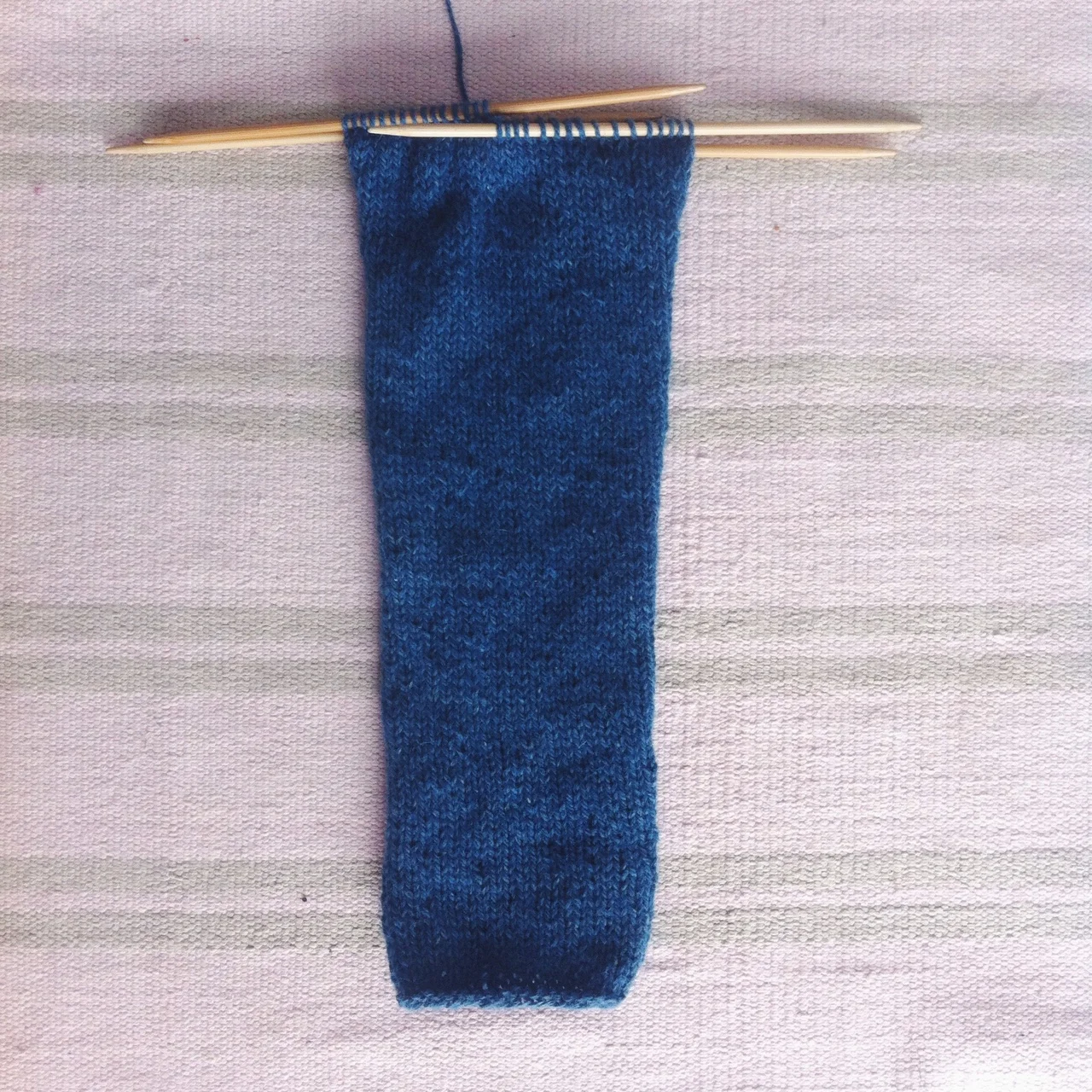
Small circular needles are small 30cm circulars (or sometimes even smaller) with bent tips. I use the Addi ones. I did hate them but have come to see that actually, with a little practice, they are actually very speedy. I ALWAY need to go up a needle size with little needles though as my gauge tends to get tighter - which makes sense if you think about how they are knit. Because the stitches are held in a small tube rather than stretched a bit on normal needles, the yarn between stitches is pulled a little tighter, and this leads to tighter knitting. 

When choosing the method to suit you, consider that everybody has their own knitting quirks; different styles, different hands, different levels of finger flexibility. So what you might find comfortable and comforting I might not. You really do need to try all styles - and try them more than once. It takes a little while to get used to and comfortable with a new style. 

Georgie talks about options for different ways to knit sleeves in this post. She also gives her amazing way for picking up underarm stitches in this other post.

Towards the bottom of the post Georgie mentions that in the very next round, after the round where you have picked up your stitches, you need to do a ssk and a k2tog. You do these at the join between the new underarm stitches and the existing sleeve stitches, to close the gap. You do a ssk when you get to the end of your existing sleeve stitches, knitting one of the sleeve stitches you were holding on waste yarn together with one of the new underarm stitches. You follow that up with a k2tog when you get to the last of the new underarm stitches, which closes the gap between the underarm stitches and the existing sleeve stitches. 

You will love this underarm. It has no gaps and looks great. I use it on every top down seamless pattern I make now. 

Yarn

So yesterday I was talking about how materials matter. How 100% wool does not equal 100% wool in all cases. I know this is a tricky subject when you are a new/intermediate knitter as there are all these new words and who knows what they all mean?

Have I got the podcast for you - two podcasts actually. There is a podcast called Knit FM by Hannah Fettig and Pam Allen and it is a true wealth of information. They cover Yarn - Part 1 and Yarn - Part 2. Get stuck in - if you are even vaguely interested in yarn you will love it. I just love Pam's voice. She sounds so lovely you will want to give her a hug - or maybe that's just me? 

One final thing today - A small few-but-mighty of you took me up on my Stash Less Ripping Challenge. I'm going to send a little something to the brave Libby who ripped out this lovely cabled cardy. Yay Libby!

See you Friday x

Felicia

In Around The Traps, How To Tags knittingtipsandtricks
2 Comments

Why materials matter!

November 11, 2014 thecraftsessions
The perfect pairing of project and materials.

The perfect pairing of project and materials.

When I was a newbie crafter I often purchased materials because I thought they were cute (for the kids), or beautiful (for me), or they were on sale (cheap). I put little thought into the properties of the materials I was using because I didn’t understand how critical they were. I thought that yarn was yarn, and fabric was fabric. And I think this is a common mistake that many new crafters make.

For me, choosing the wrong materials lead to many projects that were technically OK, but just didn't sing. And if you are going to take the time to make something with your hands you really want it to sing, don't you? 

Materials categorically affect the success of your project. They affect the longevity, the usability, the beauty and ultimately the joy the project brings; while it is being created and during it's lifetime. 

When your project is completed, it is the properties of material that matter - does it drape, does it pill, does it stretch, does it have enough weight, does it have enough strength, is it stiff, is it floppy, is it too heavy, too light and most importantly does it work for the thing you are making. Some properties are immediately visible but sometimes you can’t tell until the project is complete. And sometimes, even after a lot of practice you get it wrong. 

As a lovely instagram friend reminded me the other day - a gorgeous material is only gorgeous if paired with the right pattern. The perfect pairing of a project and materials will bring out the best qualities of both the pattern and the materials.

Let's use longevity as an example because it is one of the key things I am looking for. I want my projects to last, and I want them to wear beautifully.

Much of my making is children's clothes. Much of the wearing they do of those clothes is a little harsher than you or I might wear them. Blueberries, watermelon, grass, glue, ink and many many rocks have created havoc on the things I have lovingly made for them. As a loving parent your only option when faced with the carnage is to smile and hold your pain deep deep inside. As a result I have upped-the-anti on the materials I use, based on the number of outfits coming home from school with holes in the bottoms. I'm still making the same patterns but I no longer use flimsy fabrics. For shorts I once used cotton fabrics including jersey and quilting cottons. My baseline is now a lightweight canvas or linen/cotton blend. Something with strength and durability.

I do something similar for kid's frocks. Although the odd one gets made out of something super light and plain (I'm looking at you lovely pale pink Geranium that now has three ink stains and a hole in the front), I generally only make them out of a quilting cotton weight fabric. I trade off beautiful drape for durability.
Lesson - Small person shorts (in our family) need to be made in a light canvas if the aim is to get more than a few weeks wear from them.

I was wondering out loud the other day why I use so many prints in the fabrics I choose, rather than solids (which I love). I have realised the answer is "to disguise the wear and the stains". Again this is something to consider when choosing your materials if you are making for mucky pups like my lot. You will never achieve the gorgeous tone-on-tone linen kidswear look so beautifully epitomised by the Scandinavians, but I've learnt to live with that and you can too ;).
Lesson - Prints increase longevity due to stain disguising powers.

After strength, the next thing to consider is how it wears as well as the beauty of the material. Ask the question - is it still beautiful when used with the pattern I have in mind?

A knitting example - Once when I was a newish knitter I got completely suckered in by all the comments on Ravelry about the softness of Malabrigo Worsted. It is truly an amazingly soft yarn! I took the plunge and ordered a sweaters worth in the gorgeous Paris Nights colourway. I then knitted a whole jumper. At the time this was a massive undertaking that involved emotional strength and guts. Before I had even finished the jumper I could see that it was going to pill like a b@#%ard. Who wants to walk around the streets looking all pill-y? So it became a house cardigan - but it was too depressing to even use for that. I threw it away for it’s sake and mine. It just made me too sad.
Lesson – A super-soft wool is not generally a good sweater wool.

Later I used the very same super-soft Malabrigo Worsted for a Toddler Cowl – a project to which it is entirely suited and it still looks stunning a year or two in. The kid loves it because it is “just so soft mama”.  Perfect pairing. 
Lesson – A super-soft wool makes a great kid cowl.

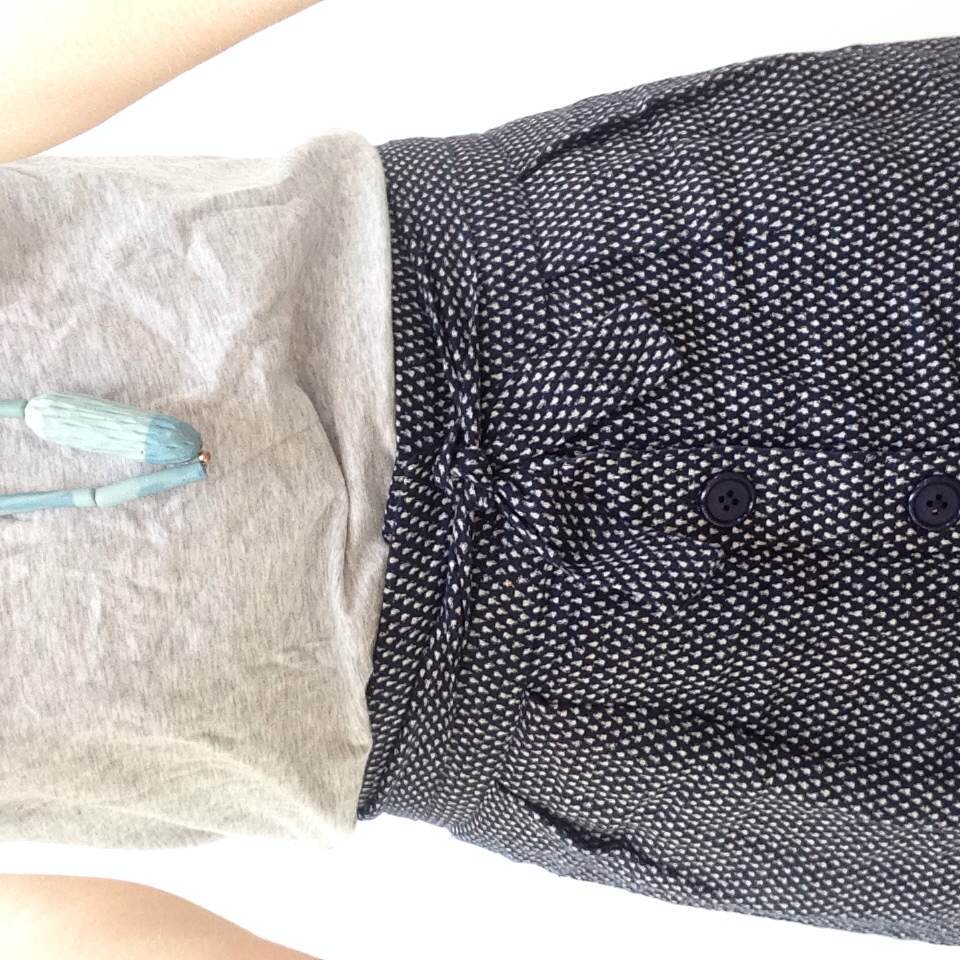
Now all this talk about the "right" materials may have you thinking that I am talking about expensive yarns and fabrics. To which I would say – not at all!! Two recent projects were tiny baby vests that I made using yarn that was about $4.50 a ball. One was a tiny big squeaky but the other was Alpaca and simply divine. A favourite pairing of materials and pattern was a Wiksten skirt I made by chopping up an old pregnancy dress I loved. It no longer fits as I no longer have DD boobs, but rather than throw it out, I hoarded it because I loved the swish of the fabric. I made it to go on holiday and it is one of the favourite things I have ever made.

Below is a photo of the aforementioned skirt but in an effort to keep it really real in this space I want to give you the following info ;). The photo is a selfie taken in a campsite bathroom that was citrus yellow and royal blue. It was taken at a very very weird angle to make use of the tiny white bathroom door as a backdrop. In real life I am much more woman shaped. 


The right materials are ones that suit the pattern you are using AND with that pattern achieves the properties you want the project to have. 

simple things to remember when choosing materials if you are a newbie
 

Fabrics - If you are choosing materials for clothing think about the weight of the fabrics that you currently wear for that type of garment at the moment. If you are making a frock check the back of the pattern obviously, but then go and feel similar frocks in your cupboard to get an idea of the weight of fabric you should be looking for. Pick up the skirt in your hand and let it fall to see how the fabric drapes. These are the qualities you are looking for in a fabric is what you are looking for when you shop.

Yarn – Look for yarns that have similar properties to the ones suggested in the pattern. But remember that 100% wool and 100% wool are not the same thing. If possible feel them, look on Ravelry, and ask for advice. Look for whether they have ply's twisted together (strands twisted together) or whether they are a single yarn strand or whether they are woollen spun. Some 100% wools are supersoft and floppy. Others are twisted and solid. Others are bouncy and spun. If you aren't sure what any of this means then pop back tomorrow and I will give you a wonderful resource.The more you can learn about fibre the better!!

Feel free to ask me any question you want about what materials to use when. I'll do my best to help.

Felicia x 

In Thoughts On Craft, How To
21 Comments
← Newer Posts Older Posts →

Welcome! I'm Felicia - creator of The Craft Sessions and Soul Craft Festival.

This blog aims to celebrate the connection between hand-making and our well-being.
These posts aim to foster a love of hand-making and discuss the ways domestic handcrafts elevate our everyday.

I love the contributions you make to this space via your comments and learn so much from each and every one. x

Thoughts On Craft

Simple Sewing 101

Stash Less

The RetreaT

Featured
Making Fast Fashion: Some More Of The Grey
Apr 19, 2022
Making Fast Fashion: Some More Of The Grey
Apr 19, 2022
Apr 19, 2022
Is My Making Fast Fashion?
Apr 12, 2022
Is My Making Fast Fashion?
Apr 12, 2022
Apr 12, 2022
Why Gauge Matters
Apr 5, 2022
Why Gauge Matters
Apr 5, 2022
Apr 5, 2022
Craft As Simple Mundane Forward Movement
Mar 29, 2022
Craft As Simple Mundane Forward Movement
Mar 29, 2022
Mar 29, 2022
Craft As A Virtuous Cycle*
Mar 22, 2022
Craft As A Virtuous Cycle*
Mar 22, 2022
Mar 22, 2022
Craft & The Slow Nostalgic Finish
Mar 15, 2022
Craft & The Slow Nostalgic Finish
Mar 15, 2022
Mar 15, 2022

popular posts

Craft As A Project V’s Craft As A Practice

Our Fear Of Going Back

Making Is Not Inherently Creative

Why All Crafters Need A Visual Diary

Craft As A Manifestation Of Love And Loss

Moving On From Perfectionism

The Secret To Becoming A Great Knitter!

Simple Sewing 101 - Part 1

Craft In The Middle Of Motherhood

Another #theyearofthescrap #ellenscardigan using some #oldmaidenaunt alpaca silk from many years ago. What I love about this little cardy is it’s simplicity and how little yarn it uses. Perfect for scrap knitting. I now have a little pile of ba
New blog post: Craft as elevating the mundane! I think this idea is so important. 🌿 'Making is about enriching the moments of our lives; it’s about making the mundane (and not the extraordinary) more abundant and that bit more lush…. el
Block 8/12 - I’m so excited to be back making this for my smallest for her 10th birthday. It’s a #stash_less #theyearofthescrap quilt that is based on an incredible #geesbend quilt. And it’s all scraps and precious bits and pieces.
Another #theyearofthescrap #ellenscardigan using some #oldmaidenaunt alpaca silk from many years ago. What I love about this little cardy is it’s simplicity and how little yarn it uses. Perfect for scrap knitting. I now have a little pile of ba New blog post: Craft as elevating the mundane! I think this idea is so important. 🌿 'Making is about enriching the moments of our lives; it’s about making the mundane (and not the extraordinary) more abundant and that bit more lush…. el Block 8/12 - I’m so excited to be back making this for my smallest for her 10th birthday. It’s a #stash_less #theyearofthescrap quilt that is based on an incredible #geesbend quilt. And it’s all scraps and precious bits and pieces.
The Blog Archives!
  • April 2022
  • March 2022
  • February 2022
  • December 2021
  • March 2021
  • February 2021
  • November 2020
  • July 2020
  • June 2020
  • May 2020
  • April 2020
  • March 2020
  • February 2020
  • December 2019
  • March 2019
  • February 2019
  • January 2019
  • December 2018
  • November 2018
  • October 2018
  • August 2018
  • July 2018
  • May 2018
  • April 2018
  • March 2018
  • February 2018
  • January 2018
  • December 2017
  • November 2017
  • October 2017
  • September 2017
  • August 2017
  • July 2017
  • June 2017
  • May 2017
  • April 2017
  • March 2017
  • February 2017
  • January 2017
  • November 2016
  • October 2016
  • September 2016
  • August 2016
  • July 2016
  • June 2016
  • May 2016
  • April 2016
  • March 2016
  • February 2016
  • January 2016
  • December 2015
  • November 2015
  • October 2015
  • September 2015
  • August 2015
  • July 2015
  • June 2015
  • May 2015
  • April 2015
  • March 2015
  • February 2015
  • January 2015
  • December 2014
  • November 2014
  • October 2014
  • September 2014
  • August 2014
  • July 2014
  • June 2014
  • May 2014
  • April 2014
  • March 2014
  • February 2014
  • January 2014
  • December 2013
  • November 2013
  • October 2013
  • September 2013
  • August 2013
  • July 2013
  • June 2013
Featured
Making Fast Fashion: Some More Of The Grey
Apr 19, 2022
Making Fast Fashion: Some More Of The Grey
Apr 19, 2022
Apr 19, 2022
Is My Making Fast Fashion?
Apr 12, 2022
Is My Making Fast Fashion?
Apr 12, 2022
Apr 12, 2022

We Live and work on the traditional lands of the Wurundjeri people of the Kulin nation.
We acknowledge that sovereignty was never ceded and pay our respect to elders past, present and emerging.

Copyright the Craft Sessions 2020

Logo designed by the lovely Mara of Printspace and Girling Design