


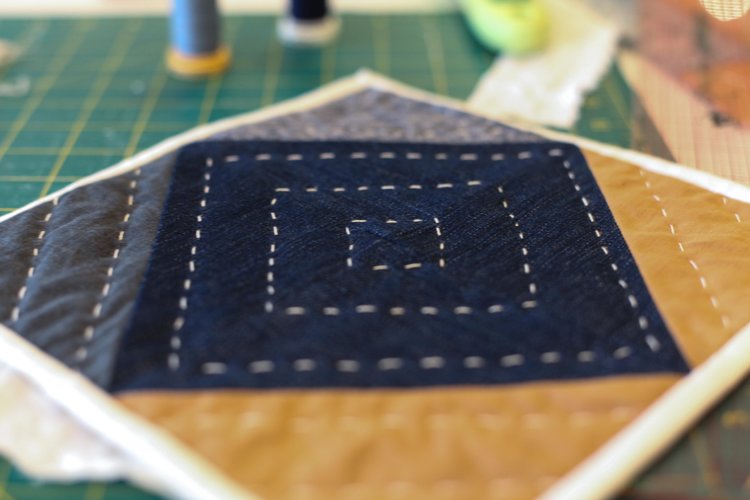
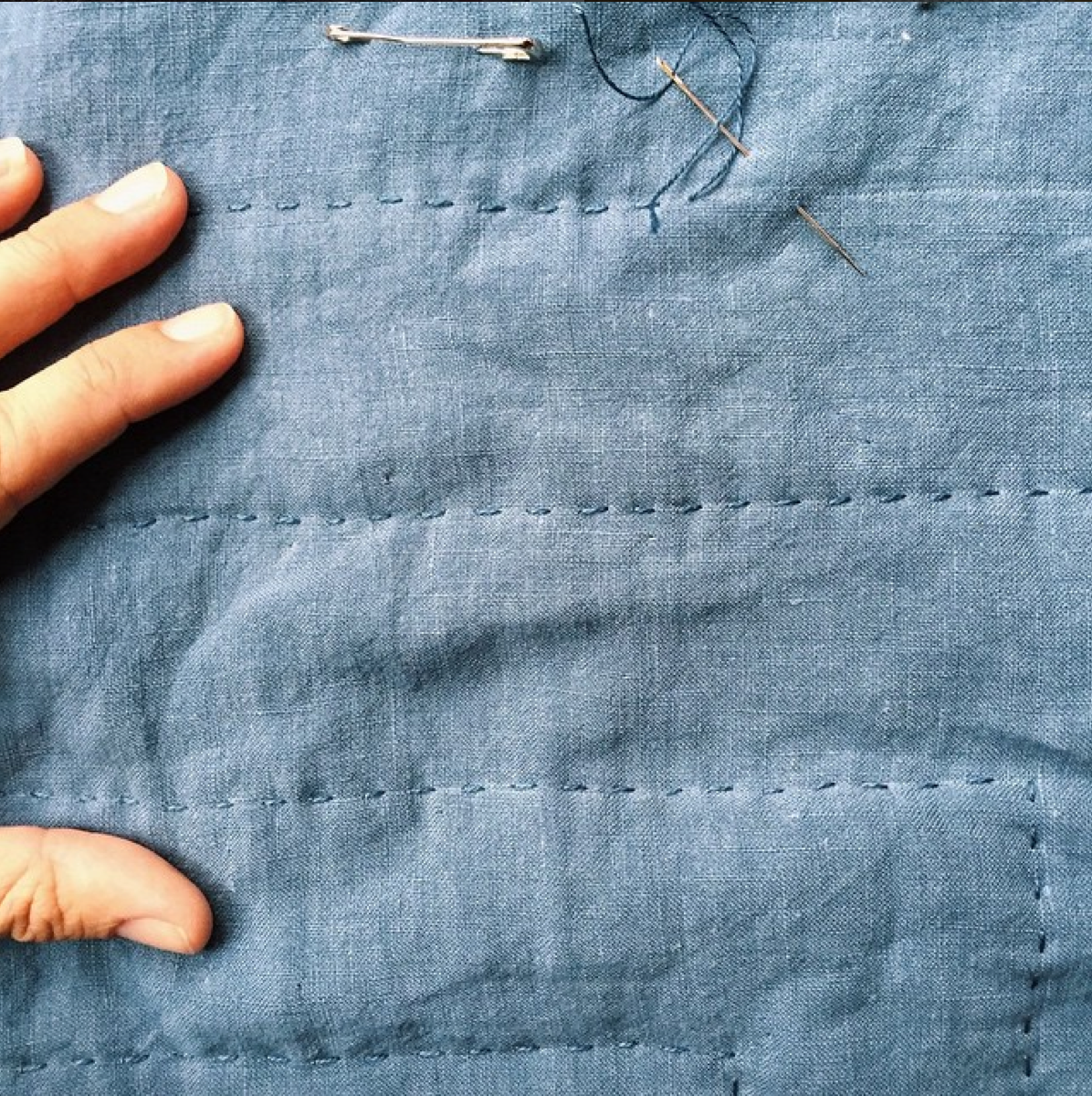



Spend the day with Anna, exploring the simple beauty of hand quilting by learning to hand stitch a cushion top or wall hanging.
Teacher: Anna Farago
Workshop Duration: Full day
Description: The workshop will start with the essentials of how to prepare and secure the layers of a quilt. Once the layers are prepared, options for marking where to stitch will be shown and explained. Finally the hand stitching will be the focus. You will have plenty of time to get your hand quilting technique worked out, practiced and applied. Binding will also be on the agenda.
Materials to bring:
- top fabric for cushion: 21 x 21 inches OR
- top fabric for cot sized quilt: 1 metre of fabric which is at least 115cm wide
- base fabric for cushion: 21 x 21 inches for backing. Preferably something plain and simple like calico or cotton OR
- base fabric for cot sized quilt: 1 metre of fabric which is at least 115cm wide. eg. flannelette or brushed cotton for back of the quilt
- batting
- rotary cutter and cutting mat (if you have one. Some will be supplied if you don't)
- water soluble fabric marker, greylead pencil, ruler and masking tape
- Perle 8 or sashiko thread
- sturdy long needle with large eye – Sashiko or Straws
Samples and examples of quilts and cushions made using the techniques and methods to be used during the workshop will be on show. Quilting pins and clips are provided.
Takeaway: Depending on designs and stitching time, you will leave with a near finished hand quilted cushion top or small quilt and the knowledge and instructions on how to finish it off.
Level: Beginner
Prerequisites: none
Spend the day with Anna, exploring the simple beauty of hand quilting by learning to hand stitch a cushion top or wall hanging.
Teacher: Anna Farago
Workshop Duration: Full day
Description: The workshop will start with the essentials of how to prepare and secure the layers of a quilt. Once the layers are prepared, options for marking where to stitch will be shown and explained. Finally the hand stitching will be the focus. You will have plenty of time to get your hand quilting technique worked out, practiced and applied. Binding will also be on the agenda.
Materials to bring:
- top fabric for cushion: 21 x 21 inches OR
- top fabric for cot sized quilt: 1 metre of fabric which is at least 115cm wide
- base fabric for cushion: 21 x 21 inches for backing. Preferably something plain and simple like calico or cotton OR
- base fabric for cot sized quilt: 1 metre of fabric which is at least 115cm wide. eg. flannelette or brushed cotton for back of the quilt
- batting
- rotary cutter and cutting mat (if you have one. Some will be supplied if you don't)
- water soluble fabric marker, greylead pencil, ruler and masking tape
- Perle 8 or sashiko thread
- sturdy long needle with large eye – Sashiko or Straws
Samples and examples of quilts and cushions made using the techniques and methods to be used during the workshop will be on show. Quilting pins and clips are provided.
Takeaway: Depending on designs and stitching time, you will leave with a near finished hand quilted cushion top or small quilt and the knowledge and instructions on how to finish it off.
Level: Beginner
Prerequisites: none
We all have the capacity - and often the desire - to deny truths that show us engaged in things we know aren’t ideal. To minimise, avoid, distract and rationalise our way to feeling OK with our choices and our behaviour.
And it makes sense. It’s human to avoid the hard stuff, especially when that hard stuff involves us changing behaviours we enjoy. I do it. Regularly. And I’ve been doing it regularly in my making, for many years, in many ways.
“The term fast fashion refers to ….speedy production of ….clothing, ….. in order to meet the latest and newest trends.”
I do this. I produce things in a speedy way in order to meet the latest and newest trends.
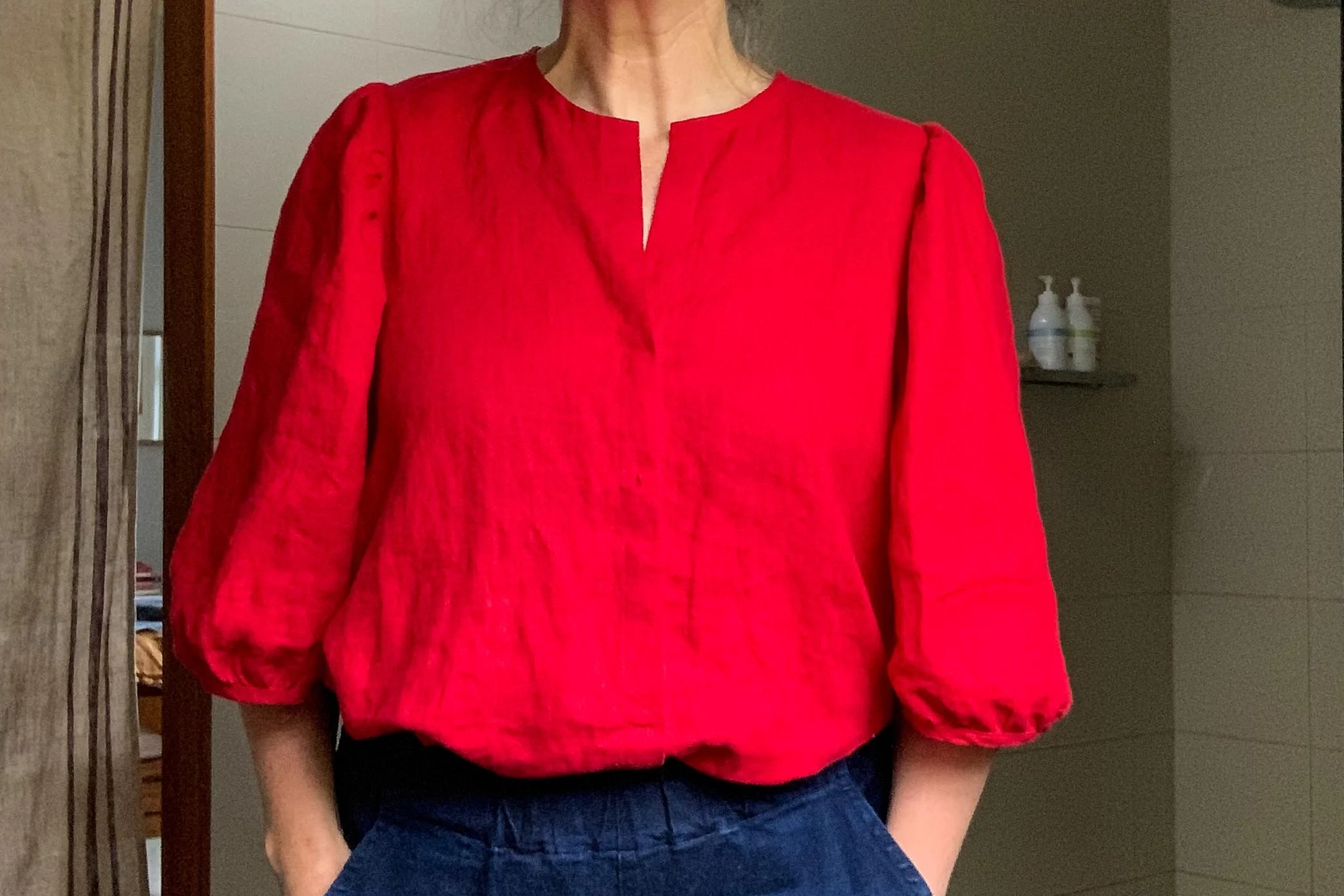
So I wrote last week a post asking “Is my making fast fashion?”. And then I did a video on Instagram discussing similar topics in a slightly different way. And as always, you lovely humans have helped me clarify some of my thinking with your thoughtful, clever commentary.
And while I think there is so much more to discuss, here are four key possibly-more-meta ideas that have come up for me out of those conversations.
In using the quote last week that suggested that there was no single answer, and suggesting that this was freeing, I really did mean that we should sit in the grey. Not that the lack of “an” answer to this question should mean we get to ignore the question but rather that the lack of “an” answer means that we need to keep asking bigger more beautiful questions. And keep asking them.
Is my making fast fashion?
Am I living my values or merely thinking them?
And how can I make those two things a little more aligned in this moment?
These are my big beautiful questions.
Yours might be different.
And importantly this leads to point 2.