
Knitting - Steeking
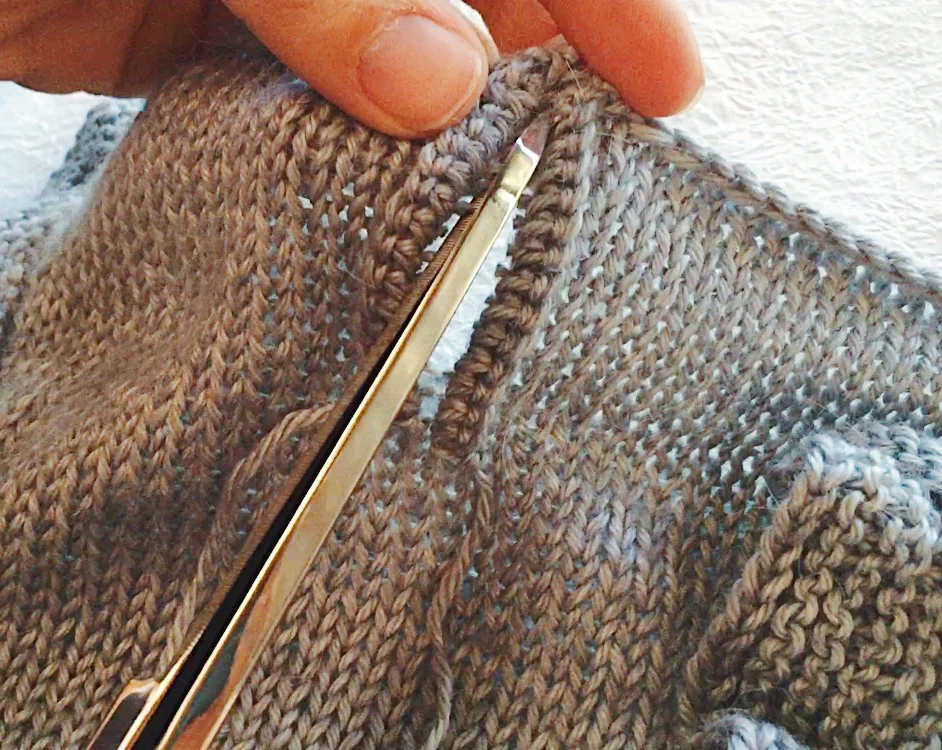
Steeking is a technique which involves cutting your knitting and it is not as scary as it sounds. It may even revolutionise your knitting!
If you are interested in colourwork, then knitting in the round and cutting at the end is a much easier way to make particular garments like a cardigan. A colourwork blanket may also be knitted in the round and then cut at the end. It’s also a fantastic way of making an item without purling if that is something you like to avoid.
Teacher: Adele Moon
Workshop Duration: Half Day
Description: During the class you will learn a traditional method of steeking. You will learn how to stabilise and fix the stitches with a crochet hook which will enable you to then cut through your knitting without the stitches unraveling. You will also get to see different examples of garments that have been steeked - both by hand and by machine. We will discuss the advantages and disadvantages of both methods and which method might be more appropriate for any particular project.
Materials to bring:
4mm crochet hook
Small scissors
Your swatch (details below in Homework).
Takeaway: You will leave with a swatch of steeked knitting which you can keep for reference or transform into a tea cosy
Level: Intermediate
Prerequisites: Ability to knit in the round essential on double pointed needles or a circular needle.
Homework: A swatch knitted in the round in stocking stitch on 4.5mm needles with Aran weight yarn - 80 stitches and 40 rows. You may choose to include some colourwork if you wish. Please use a pure wool. No superwash or silk.



So I wrote last week a post asking “Is my making fast fashion?”. And then I did a video on Instagram discussing similar topics in a slightly different way. And as always, you lovely humans have helped me clarify some of my thinking with your thoughtful, clever commentary.
And while I think there is so much more to discuss, here are four key possibly-more-meta ideas that have come up for me out of those conversations.
In using the quote last week that suggested that there was no single answer, and suggesting that this was freeing, I really did mean that we should sit in the grey. Not that the lack of “an” answer to this question should mean we get to ignore the question but rather that the lack of “an” answer means that we need to keep asking bigger more beautiful questions. And keep asking them.
Is my making fast fashion?
Am I living my values or merely thinking them?
And how can I make those two things a little more aligned in this moment?
These are my big beautiful questions.
Yours might be different.
And importantly this leads to point 2.