
Knitting - Steeking
This class is fun! If you are a knitter that likes a bit of adventure then this class is for you - Learn the traditional technique of steeking your knitting.
Teacher: Julia Billings
Description: In this session, we will explore how to safely cut your knitting so that you can turn a jumper into a cardigan, resize a garment up or down, add armholes and more. This traditional technique is intrinsic to Fair Isle, Scandinavian and other colourwork knitting traditions and is also useful when knitting cables or other patterns that are more easily worked in the round, for knitting with self-striping yarns and for those who prefer knit to purl...
We’ll look at the various types of steeks, as well as the yarn and stitch patterns commonly used when steeking. Participants will work and cut two different kinds of steeks on their swatches and will learn how to secure the steek once cut and to add a knitted band to the steeked edge.
Materials: 2 completed swatches (instructions for these will be provided before the event), an 80cm circular needle and a crochet hook (both two sizes smaller than those used for the swatch) and a pair of small, sharp scissors.
Takeaway: A lack of fear of steeking and the skills to incorporate a steek into a pattern.
Level: Adventurous beginner/ intermediate. Some experience with cables or stranded colourwork will be useful for the swatching process but is not required.
Workshop Length: Half day


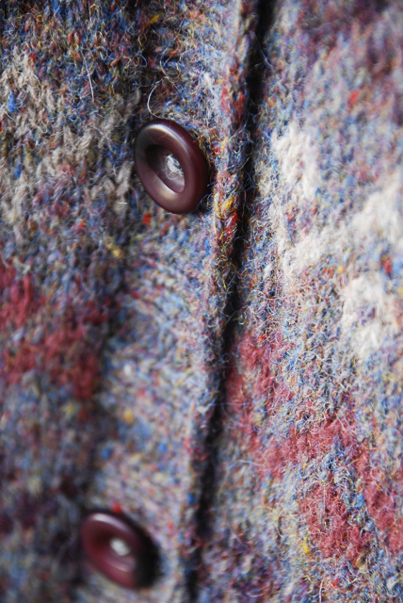
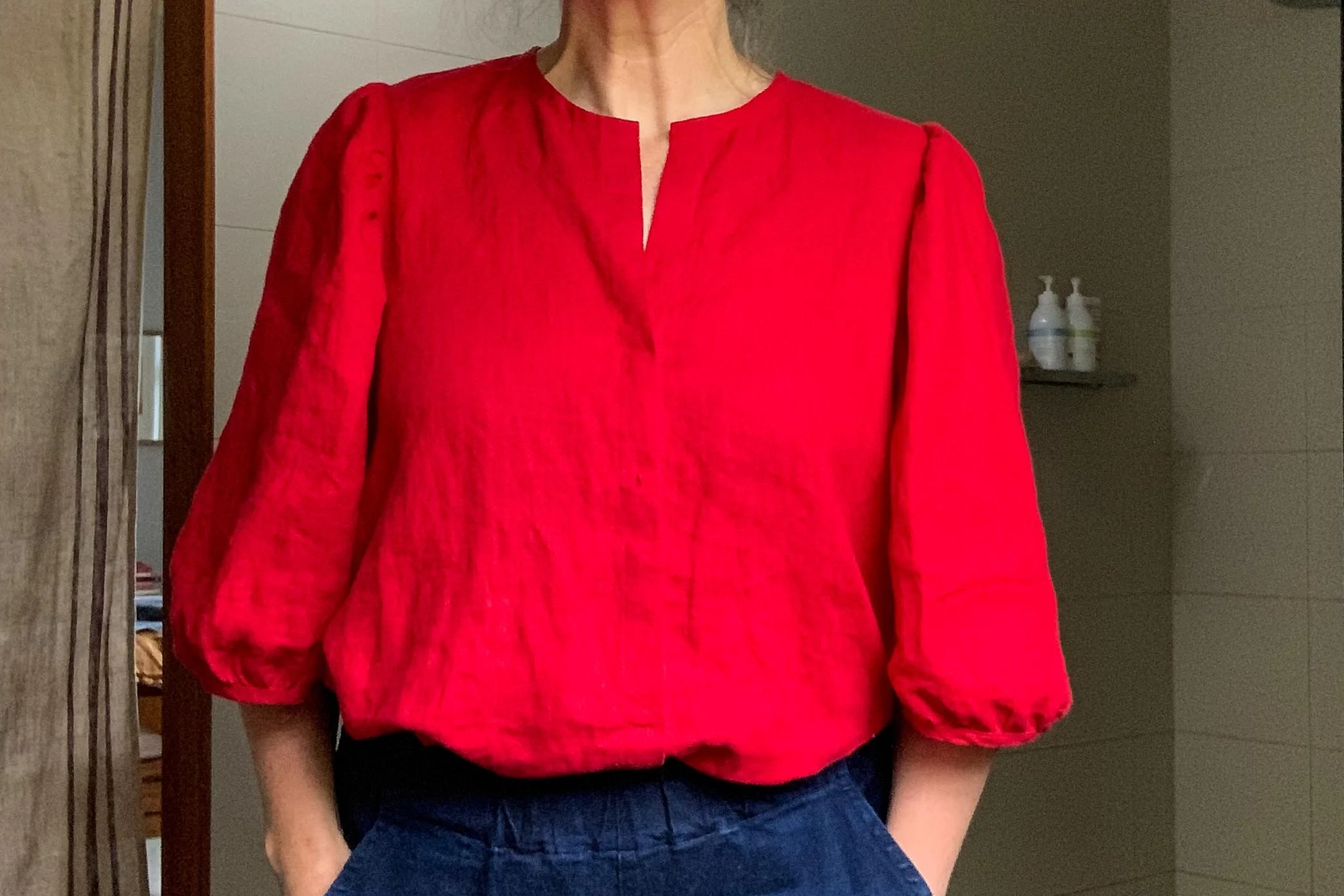
So I wrote last week a post asking “Is my making fast fashion?”. And then I did a video on Instagram discussing similar topics in a slightly different way. And as always, you lovely humans have helped me clarify some of my thinking with your thoughtful, clever commentary.
And while I think there is so much more to discuss, here are four key possibly-more-meta ideas that have come up for me out of those conversations.
In using the quote last week that suggested that there was no single answer, and suggesting that this was freeing, I really did mean that we should sit in the grey. Not that the lack of “an” answer to this question should mean we get to ignore the question but rather that the lack of “an” answer means that we need to keep asking bigger more beautiful questions. And keep asking them.
Is my making fast fashion?
Am I living my values or merely thinking them?
And how can I make those two things a little more aligned in this moment?
These are my big beautiful questions.
Yours might be different.
And importantly this leads to point 2.