
Knitting - Scandinavian Knitting
What makes Scandinavian colourwork different from other knitting traditions? Mary Jane Mucklestone is just the woman to help you explore this question and more as you delve into the world of this fabulous technique.
Teacher: Mary Jane Mucklestone
Workshop Duration: Half Day
Description: We will explore colour choices and the classic motifs used in Scandinavian stranded knitting as well as exploring techniques for tacking down extra-long floats found in many motifs. We will tackle the Norwegian purl and a different way of executing garter stitch in the round. We will also explore ideas for combining motifs and adding colourwork to liven up your future projects. We will begin our exploration by starting a headband or hat.
Materials to bring:
Two or more colours of DK-weight yarn with high colour contrast, 100% wool preferred, 50-100 yards of each.
16" circular, the smallest size recommended on the ball band
16” circular one size larger than the smallest size recommended on the ball band
1 set dpn in larger size if intending to finish hat.
Takeaway: Students will learn to distinguish Scandinavian colourwork from other world traditions, understand how small motifs are combined or altered in endless variation, to create classic well loved patterns, and even design new ones of their own!
Level: Intermediate
Prerequisites: Some experience working stranded colorwork in the round.
Homework: With smallest needle and colour of your choice DK-weight yarn that you like, cast on 84 stitches, join for working in the round. Knit one round.


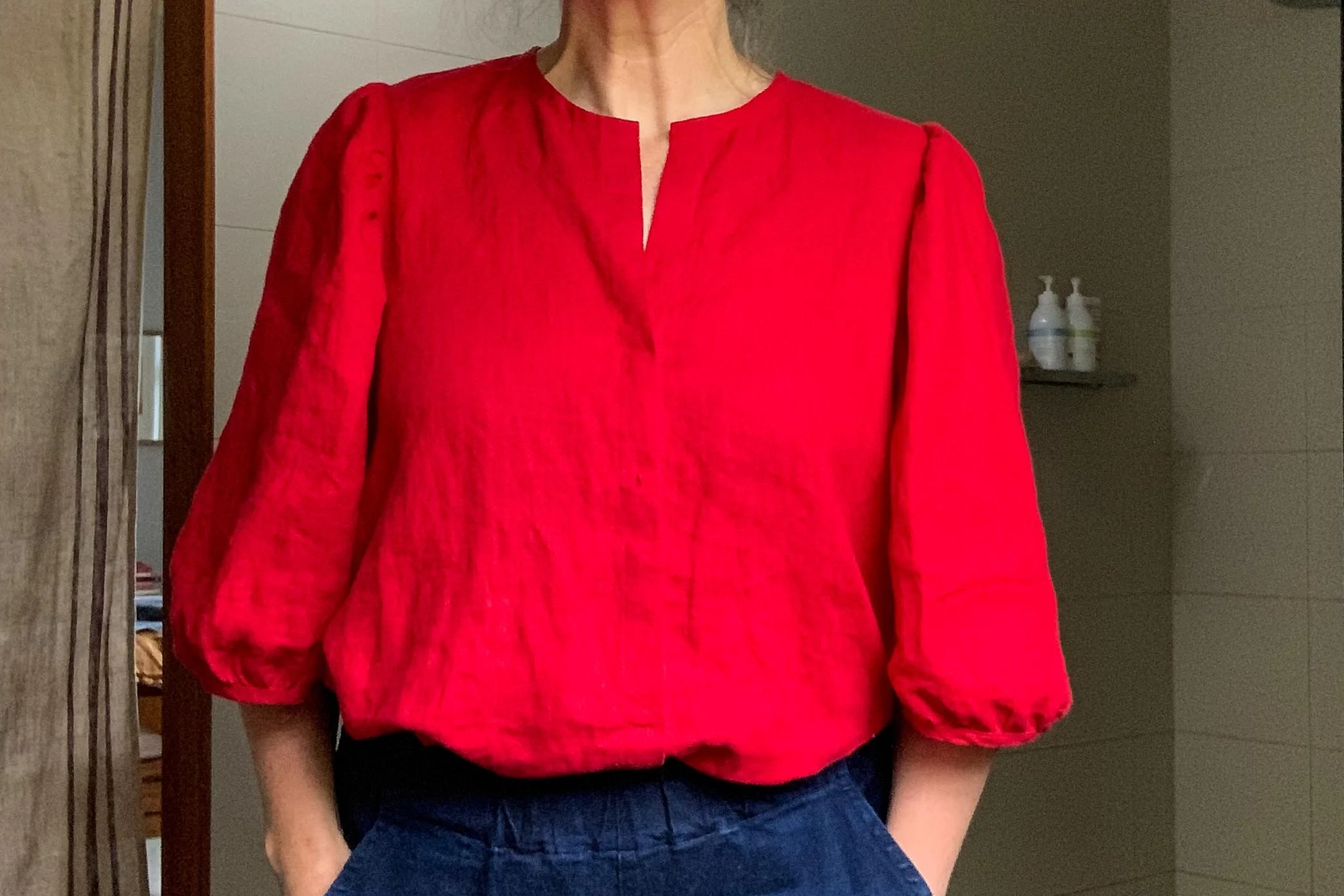
So I wrote last week a post asking “Is my making fast fashion?”. And then I did a video on Instagram discussing similar topics in a slightly different way. And as always, you lovely humans have helped me clarify some of my thinking with your thoughtful, clever commentary.
And while I think there is so much more to discuss, here are four key possibly-more-meta ideas that have come up for me out of those conversations.
In using the quote last week that suggested that there was no single answer, and suggesting that this was freeing, I really did mean that we should sit in the grey. Not that the lack of “an” answer to this question should mean we get to ignore the question but rather that the lack of “an” answer means that we need to keep asking bigger more beautiful questions. And keep asking them.
Is my making fast fashion?
Am I living my values or merely thinking them?
And how can I make those two things a little more aligned in this moment?
These are my big beautiful questions.
Yours might be different.
And importantly this leads to point 2.