
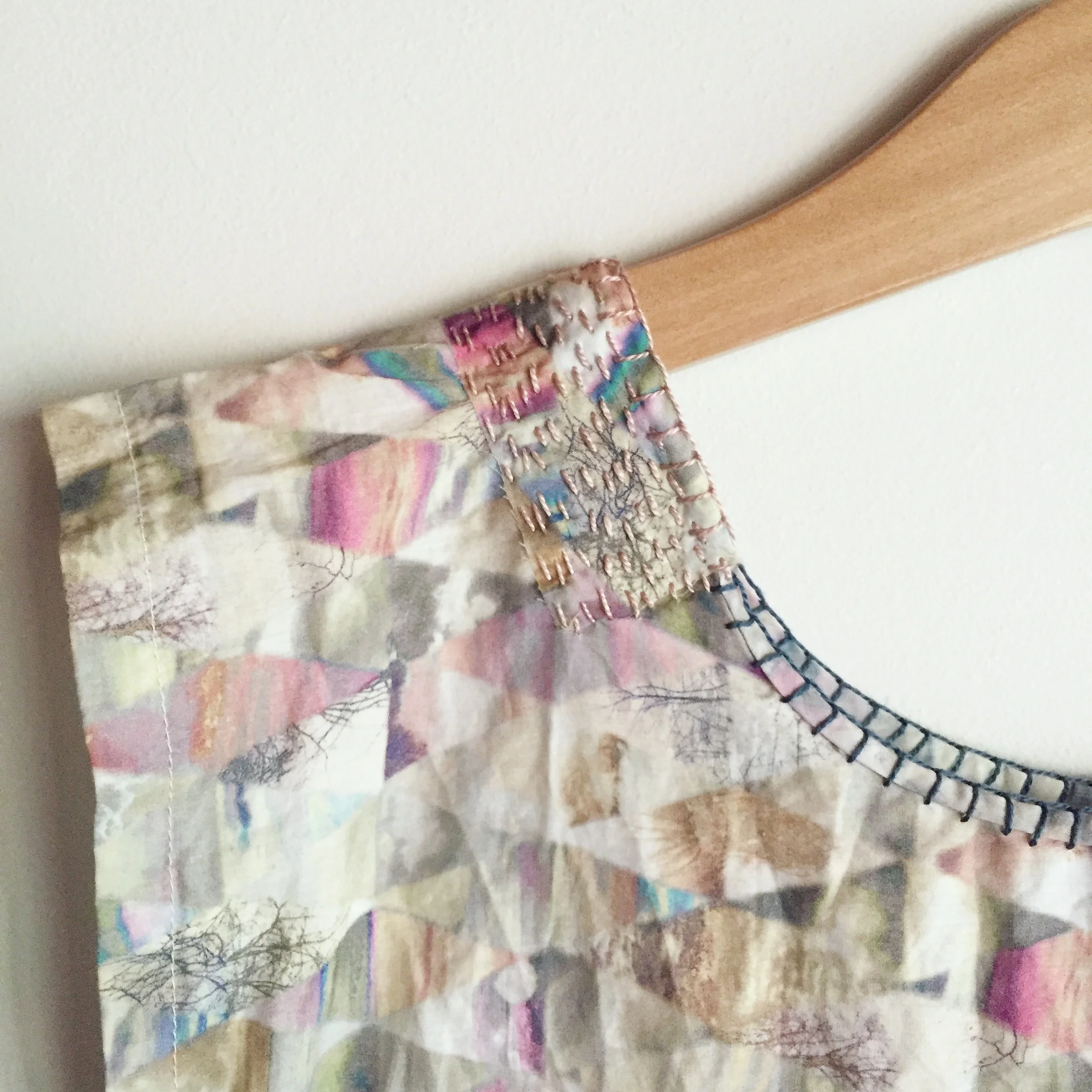
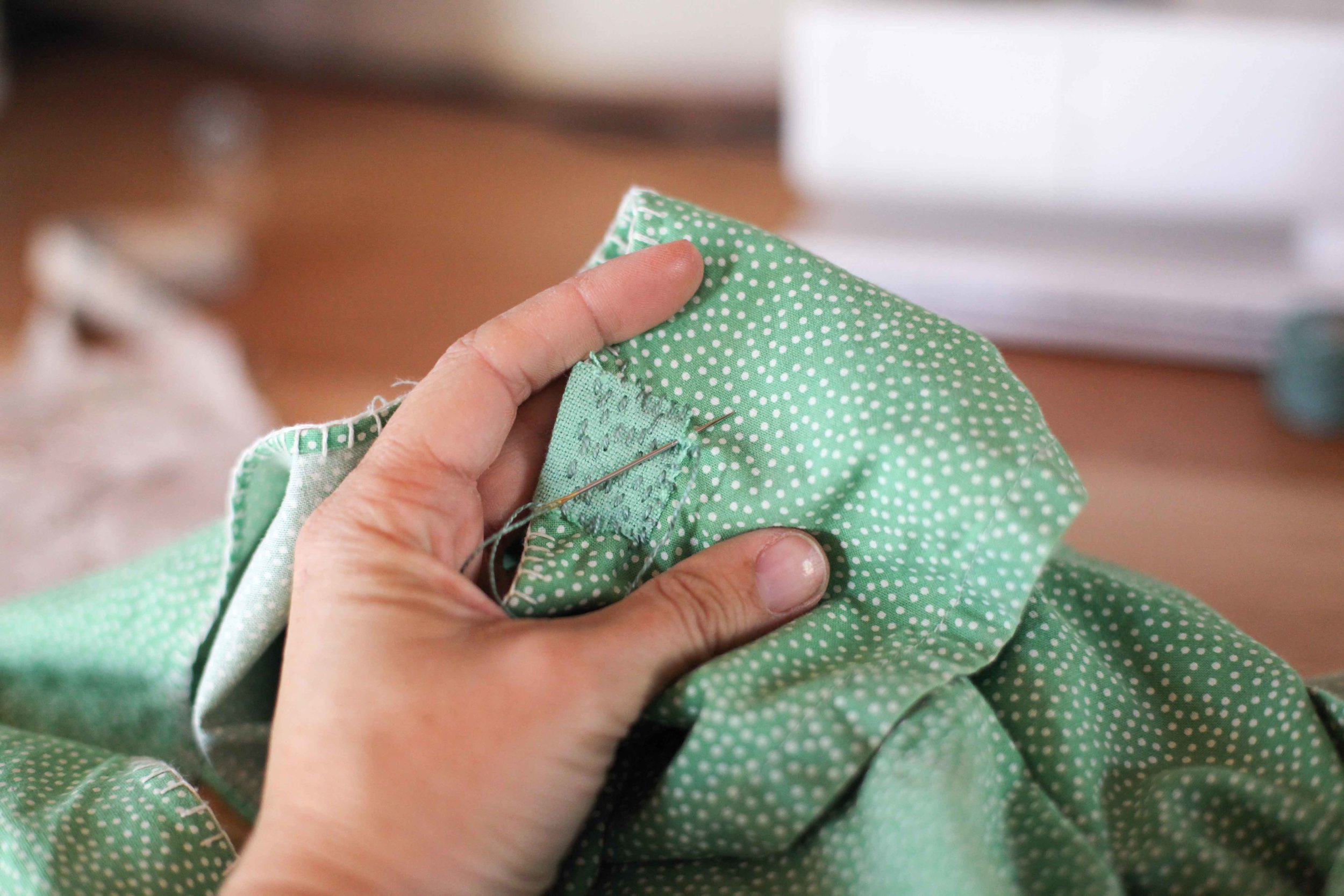



Boro embraces the beauty of irregular stitching to extend the life of your clothes. Spend the afternoon with Anna Farago exploring the use of boro stitching as a mending technique or for decorative effect.
Teacher: Anna Farago
Workshop Duration: Half Day
Description: Boro is an Japanese method of stitching which was traditionally used in peasant farming communities to mend and repair clothing. Informed by this tradition, the connection with sustainability, and a Japanese ‘wabi-sabi’ aesthetic, this class will introduce stitching methods which can used for mending of clothing or for decorative effect. You will use scrap fabrics to explore stitching patterns and uses. You are invited to bring along clothing in need of mending, your own fabric scraps or just use the materials are supplied.
Materials to bring:
- Perle thread (8,10 or 12) or sashiko thread
- sturdy long needle with large eye – Sashiko or Straws
- clothes that need mending
Fabric scraps will be supplied
Takeaway: Boro samples and/or mending of clothes
Level: Beginner
Prerequisites: None
Boro embraces the beauty of irregular stitching to extend the life of your clothes. Spend the afternoon with Anna Farago exploring the use of boro stitching as a mending technique or for decorative effect.
Teacher: Anna Farago
Workshop Duration: Half Day
Description: Boro is an Japanese method of stitching which was traditionally used in peasant farming communities to mend and repair clothing. Informed by this tradition, the connection with sustainability, and a Japanese ‘wabi-sabi’ aesthetic, this class will introduce stitching methods which can used for mending of clothing or for decorative effect. You will use scrap fabrics to explore stitching patterns and uses. You are invited to bring along clothing in need of mending, your own fabric scraps or just use the materials are supplied.
Materials to bring:
- Perle thread (8,10 or 12) or sashiko thread
- sturdy long needle with large eye – Sashiko or Straws
- clothes that need mending
Fabric scraps will be supplied
Takeaway: Boro samples and/or mending of clothes
Level: Beginner
Prerequisites: None
We all have the capacity - and often the desire - to deny truths that show us engaged in things we know aren’t ideal. To minimise, avoid, distract and rationalise our way to feeling OK with our choices and our behaviour.
And it makes sense. It’s human to avoid the hard stuff, especially when that hard stuff involves us changing behaviours we enjoy. I do it. Regularly. And I’ve been doing it regularly in my making, for many years, in many ways.
“The term fast fashion refers to ….speedy production of ….clothing, ….. in order to meet the latest and newest trends.”
I do this. I produce things in a speedy way in order to meet the latest and newest trends.
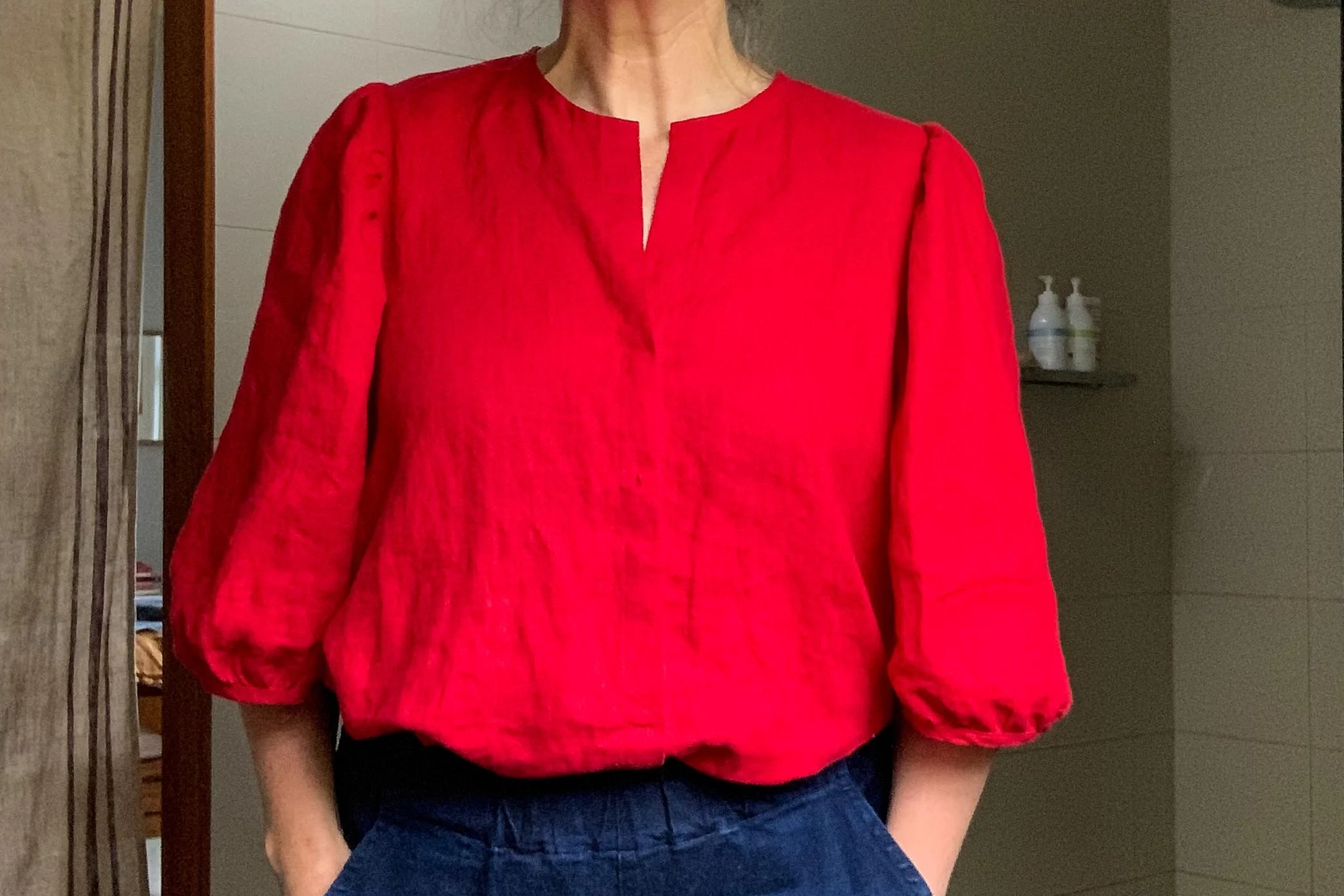
So I wrote last week a post asking “Is my making fast fashion?”. And then I did a video on Instagram discussing similar topics in a slightly different way. And as always, you lovely humans have helped me clarify some of my thinking with your thoughtful, clever commentary.
And while I think there is so much more to discuss, here are four key possibly-more-meta ideas that have come up for me out of those conversations.
In using the quote last week that suggested that there was no single answer, and suggesting that this was freeing, I really did mean that we should sit in the grey. Not that the lack of “an” answer to this question should mean we get to ignore the question but rather that the lack of “an” answer means that we need to keep asking bigger more beautiful questions. And keep asking them.
Is my making fast fashion?
Am I living my values or merely thinking them?
And how can I make those two things a little more aligned in this moment?
These are my big beautiful questions.
Yours might be different.
And importantly this leads to point 2.