
Knit Design - Grading
The hardest part for a budding designer is not coming up with ideas or even knitting the prototype. Itʼs translating that one size into a whole multitude of them. Where do all those numbers come from? How do you know what to base the sizing on? This class tackles those questions.
Teacher: Georgie Hallam
Description: Together we will walk through the process of grading a raglan cardigan for a range of sizes. We will look at what measurements to base your sizing on, where to find them and why to use them. We will look at the important of ease in a garment and how to make sure you have the right amount in each section of your garment. You will be introduced to a number of formulas and approaches that can make the sizing and grading process easier.
Having successfully graded the cardigan, we will then look at how different stitch patterns are dealt with when it comes to designing and grading a pattern.
Materials: You will need to bring 100g of dk/8ply weight yarn and 4mm needles OR size required to achieve 22 stitches and 30 rows over 4 inches.
Takeaway: An understanding of the grading process.
Level: Intermediate to Advanced. Participants need to be confident knitters and have a desire to design or customise their own garments.
Workshop Length: Half day


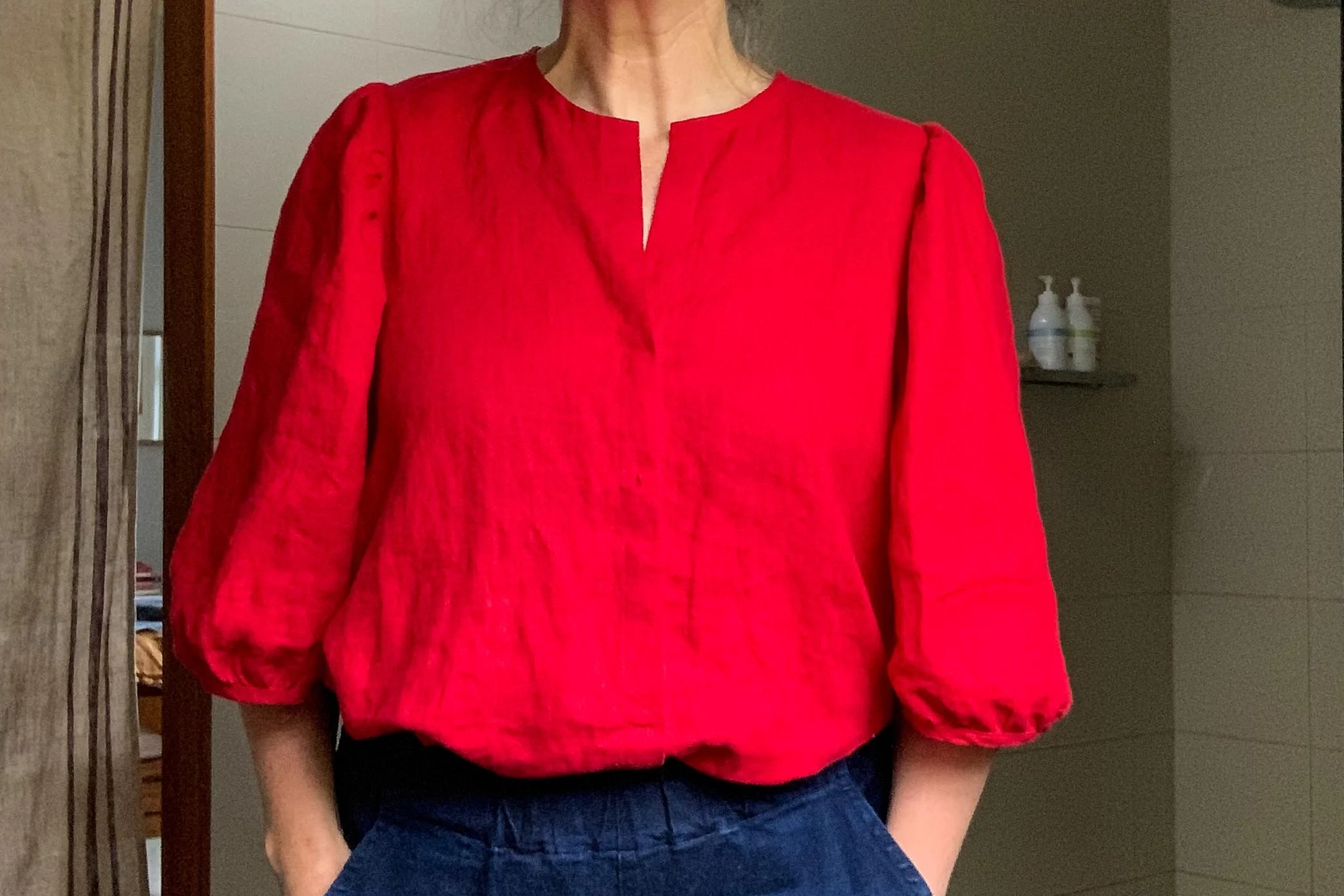
So I wrote last week a post asking “Is my making fast fashion?”. And then I did a video on Instagram discussing similar topics in a slightly different way. And as always, you lovely humans have helped me clarify some of my thinking with your thoughtful, clever commentary.
And while I think there is so much more to discuss, here are four key possibly-more-meta ideas that have come up for me out of those conversations.
In using the quote last week that suggested that there was no single answer, and suggesting that this was freeing, I really did mean that we should sit in the grey. Not that the lack of “an” answer to this question should mean we get to ignore the question but rather that the lack of “an” answer means that we need to keep asking bigger more beautiful questions. And keep asking them.
Is my making fast fashion?
Am I living my values or merely thinking them?
And how can I make those two things a little more aligned in this moment?
These are my big beautiful questions.
Yours might be different.
And importantly this leads to point 2.